

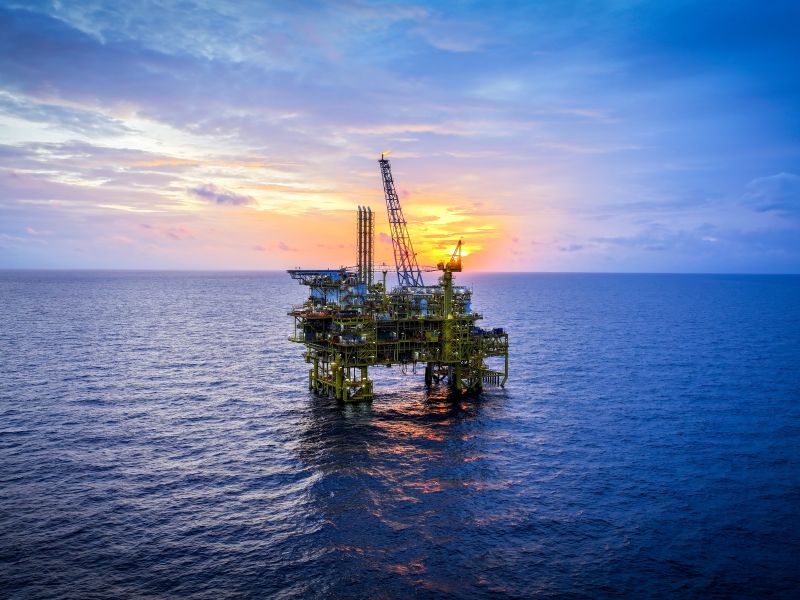
The Ima gas project forms part of the broader Ima oilfield extending across oil mining leases (OML) 112 and 117 in the shallow waters off the coast of Nigeria.
The field is being developed by a joint venture (JV) of AMNI (60%) and TotalEnergies (40%).
Recommended Buyers Guides

In September 2026, the JV reached a financial investment decision (FID) for the project, which is estimated to require an investment of approximately $1.1bn. This sanction followed the completion of commercial negotiations, front-end engineering and design and the formalisation of key commercial contracts.
Work is advancing into the engineering, procurement and construction phase ahead of eventual commissioning.
Local procurement and employment represent significant facets of project execution, with key contracts allocated to domestic operators and around 60% of the construction workforce expected to be drawn from host communities.
Production from the field is scheduled to commence in October 2028, targeting a plateau output of 350 million standard cubic feet per day (mscf/d), which equates to more than 60,000 barrels of oil equivalent per day.
Ima gas project location and reserves
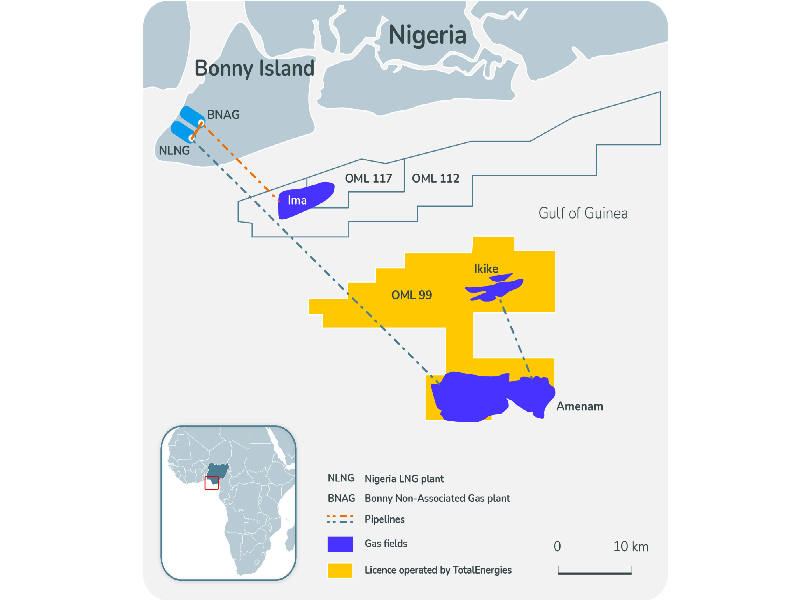
The Ima gas project development is positioned in shallow waters near Bonny Island across the OML 112 and 117 offshore licences above the Ima oilfield. Water depth across the acreage is 10m.
The development contains independently verified gross reserves of approximately 1.28 trillion cubic feet (tcf) of non-associated gas.
Ima oil and gas field discovery and appraisal
Japan Petroleum initially discovered the Ima oil field in 1973, although the accumulation was not considered economically viable for extraction at that stage.
AMNI secured the OML 112 and 117 offshore leases in 1993, teaming up with Liberty Technical Services to develop the asset.
Appraisal drilling commenced in 1994, leading to the installation of surface facilities and the launch of crude oil extraction in 1996.
Early infrastructure comprised a wellhead platform, a production unit, a pipeline network and a floating storage and offloading vessel functioning as the Ima Terminal. With the purchase of the Langley production platform, AMNI assumed total ownership of the field facilities.
The AMNI and Liberty Technical Services venture was dissolved in 1998, leaving AMNI as sole operator.
Subsequent development drilling took place in 2002 through the side-tracking of two producing wells.
In 2005, TotalEnergies entered into a JV agreement with AMNI, acquiring a 40% working interest across the two leases and assuming operatorship, while AMNI retained the remaining 60% stake.
In 2006, the Ima-12 appraisal well confirmed lean gas reserves exceeding 1.6tcf (P1). The Ima gas resource sits directly above the oil reservoir.
Two new wells were drilled in 2010 to extend field life and enhance recovery factors at the Ima oilfield.
Ima gas development details
The Ima gas field development centres on a dedicated offshore platform connected to the domestic gas network through a 22km pipeline to Nigeria LNG (NLNG).
The operational concept incorporates a simplified platform structure, shore-based electrical power supply, the complete elimination of routine flaring and continuous methane monitoring instruments.
When fully operational, the asset is scheduled to provide roughly one-third of the feed gas requirements for the NLNG Train 7 expansion project.
Nigeria LNG
NLNG, situated on Bonny Island, commenced commercial operations in 1999 as a two-train complex before expanding into a six-train facility. The current Train 7 expansion programme will lift overall processing capacity from 22 million tonnes per annum (mtpa) to 30mtpa.
The project partners sanctioned the FID for Train 7 in December 2019. In May 2020, the engineering, procurement and construction contract was awarded to the SCD JV Consortium comprising Saipem, Chiyoda and Daewoo.
