

Italy’s Fatal NDT Explosion Highlights Selection Risks for an ATEX Work Light for Confined Spaces
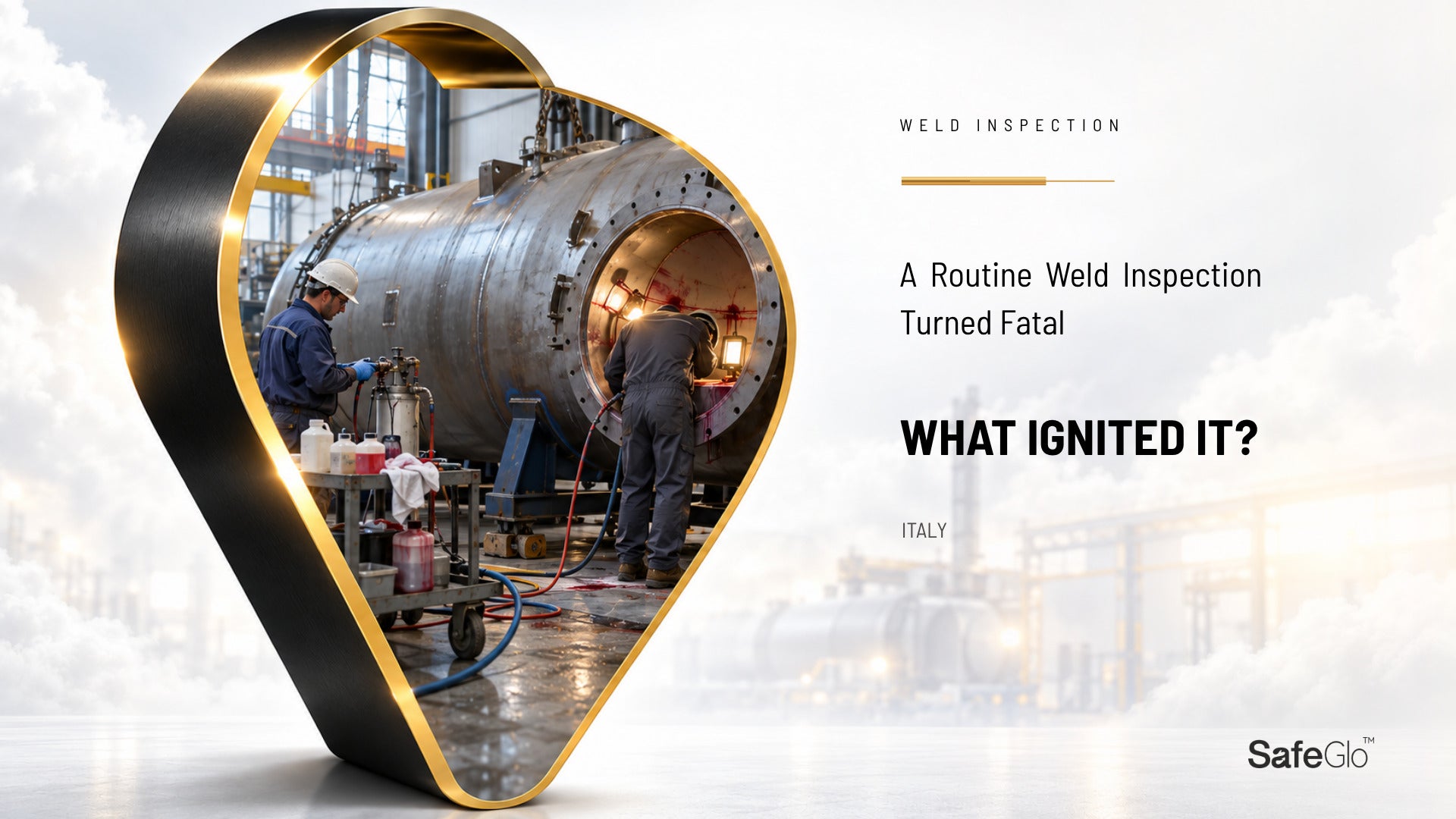
An Italian metalworking fatality published through ATS Brianza’s “Impariamo dagli errori” campaign shows why a hazardous-area lighting case cannot be separated from the chemistry and work method around it. Two workers were carrying out non-destructive testing on welds inside fabricated equipment using liquid penetrants. The process involved a red penetrant, cloth removal and a white developer containing flammable solvents sprayed with compressed air. The worker was positioned at the manway with his upper body inside the vessel when an explosion and white flash occurred. He later died from extensive burns.
The investigation identified an explosive atmosphere produced by evaporation of isopropyl alcohol and acetone. Concentrations inside the poorly ventilated vessel exceeded the lower flammability limit. The source that initiated the mixture could not be established with certainty. Investigators considered two main possibilities. One was the work light positioned just inside the vessel: it was not ATEX-suitable and could have provided an electrical ignition source or a hot surface. The other was electrostatic discharge associated with the metal spray gun and compressed-air flow through insulating hoses; equipotential bonding was missing. This uncertainty is important. Replacing one lamp does not remove a second ignition mechanism or the explosive atmosphere itself.
The risk chain to prevent
The process created vapour faster than natural ventilation could reliably remove it. The vessel geometry restricted air exchange. Spraying increased solvent release, and the worker’s body occupied the manway while the task continued. The work light was used because the NDT method depended on visually detecting indications on the metal surface. That means illumination was not optional, but the method of providing it became part of the explosion-risk assessment.
Safety managers
The priority is to stop an explosive mixture from becoming routine. The source case recommends considering non-flammable testing products, conducting a complete risk assessment, using forced ventilation, addressing electrostatic bonding and providing specific procedures and training. SafeGlo can reduce the lighting-side ignition concern when the exact product is certified for the classified gas/vapour zone. It cannot neutralise acetone, isopropanol, static charge or inadequate air exchange. Gas/vapor assessment and ventilation remain independent controls.
Operations
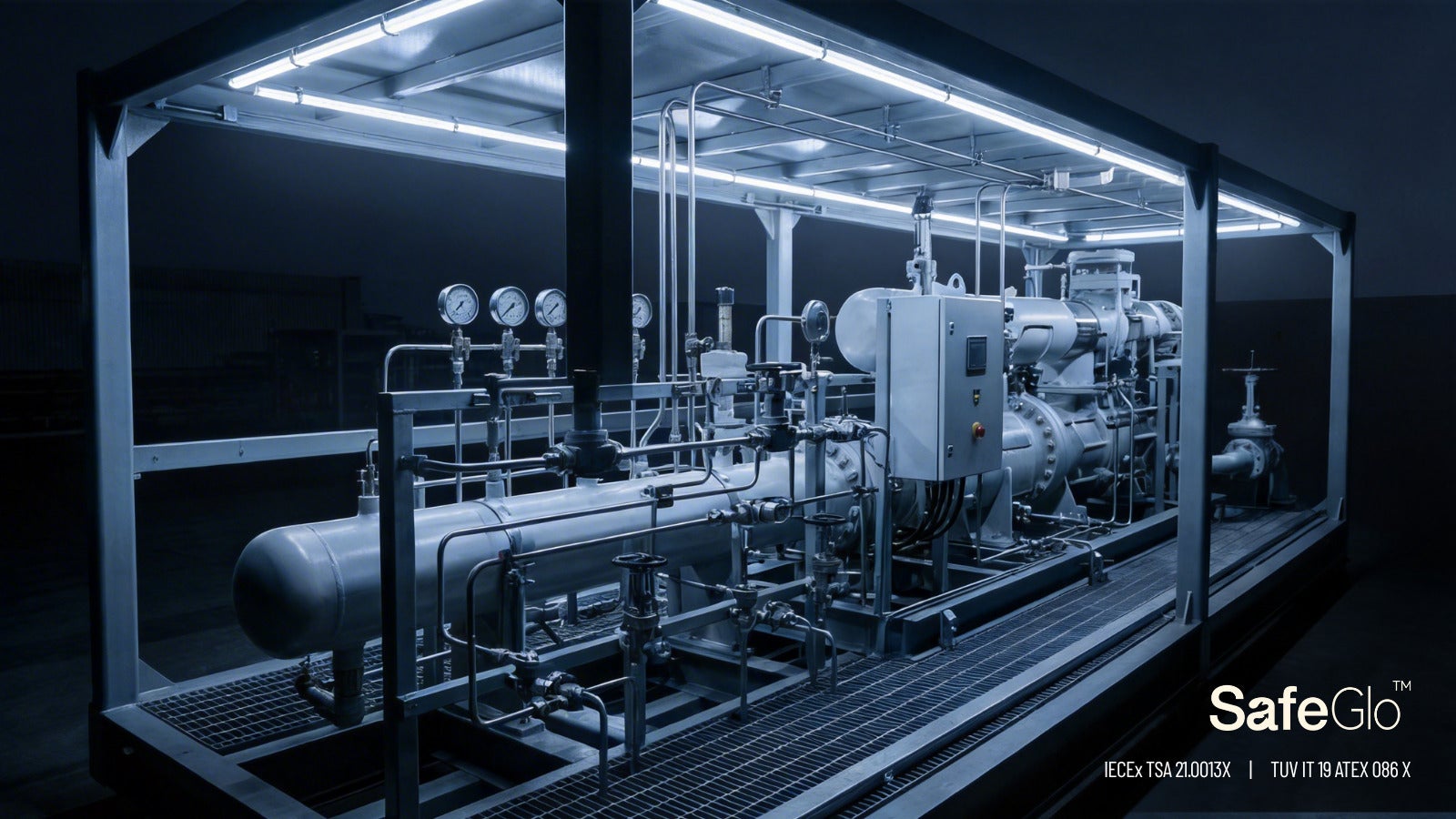
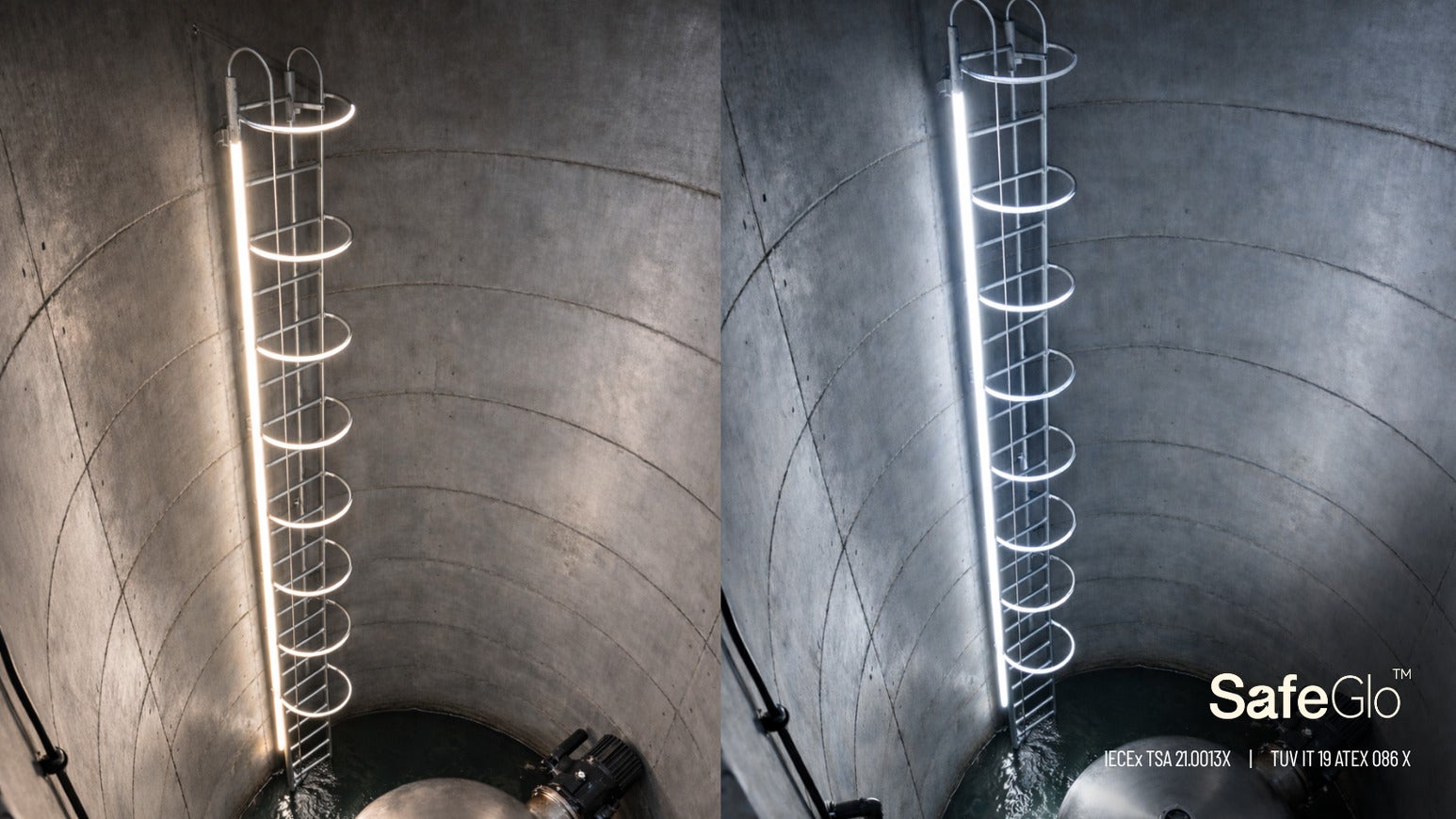
Operations need a task sequence that prevents solvent accumulation between application stages. “It dries quickly” is not a safe ventilation criterion. The job should define application quantity, purge time, air movement, atmosphere checks and the point at which visual examination can start. Flexible elongated lighting can be installed around a manway or inspection surface so the operator is not repeatedly moving a hot spotlight closer to the work. That reduces one source of task improvisation while preserving the visibility needed to inspect welds.
Engineering
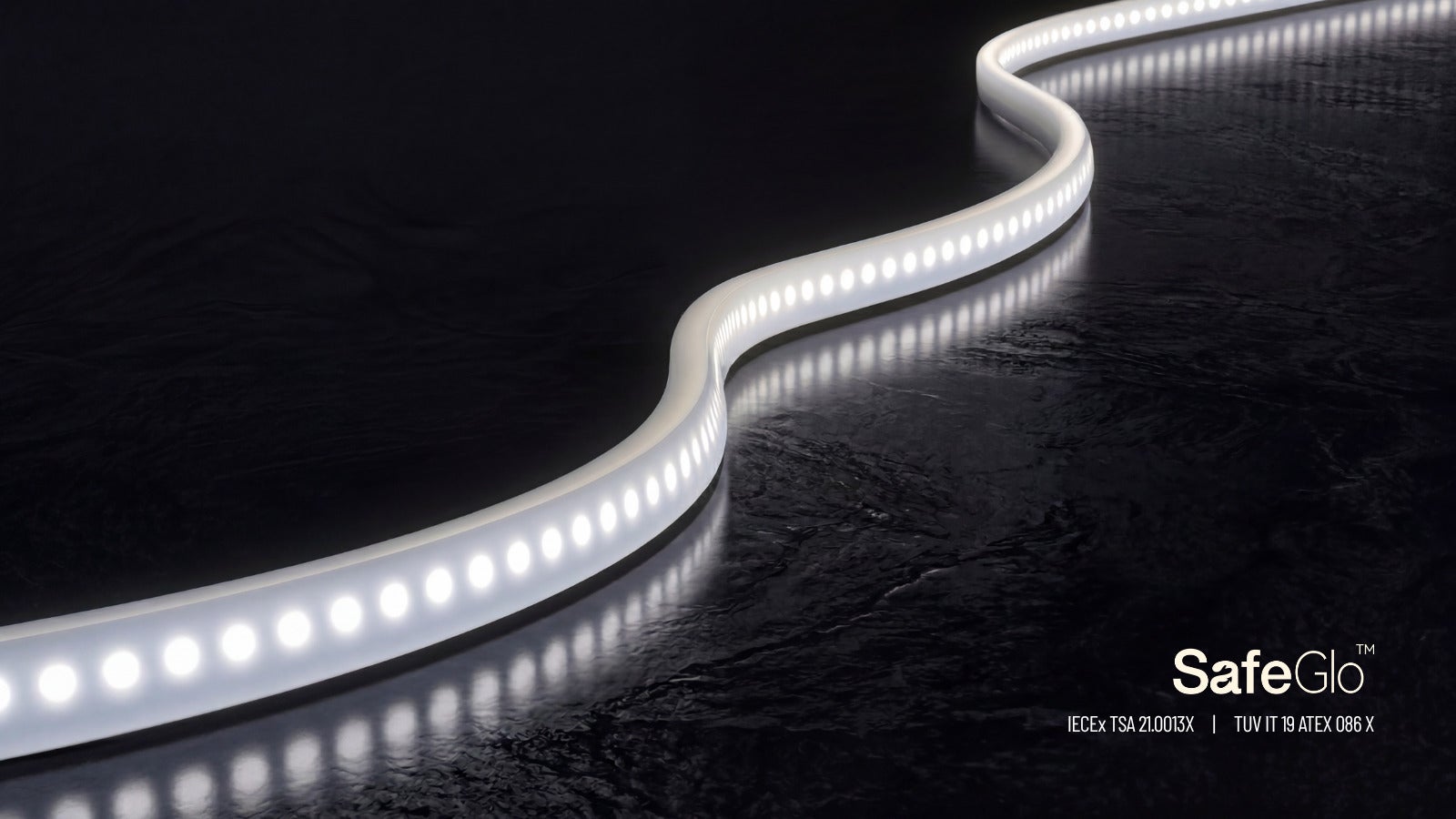
Engineering should treat the vessel as a temporary hazardous location created by the process. Zone classification, solvent properties, ventilation effectiveness, temperature class, electrostatic control and electrical equipment selection belong in one design review. SafeGlo publishes ATEX/IECEx and Zone 1/2 positioning for specified products, but the engineer still has to confirm that the exact certificate covers the gas group, temperature class and installation arrangement. A flexible strip can solve geometric coverage around curved shells and elongated weld seams, which is materially different from placing a conventional spotlight at the opening.
Procurement / ESG
The procurement risk is buying “industrial” or “waterproof” lights that have no explosion-protection approval for the job. Purchasing should require certificate numbers, marking, operating temperature, cable and power-supply conditions, chemical resistance and cleaning compatibility. Lifecycle value comes from removing improvised lights from the NDT kit and using a controlled system that can be inspected and maintained consistently.
The inspection method and the lighting method also have to be designed together. NDT requires enough contrast to identify discontinuities, but solvent application can create an explosive atmosphere that changes the electrical rules around the work. If the test chemistry, spray method or ventilation is changed, the area assessment should be revisited before the lamp is chosen. The safer design removes flammable vapour where practical before relying on certified equipment to tolerate it.
SafeGlo’s role in this environment
SafeGlo can address visibility and the lighting ignition pathway. It does not make solvent-based NDT intrinsically safe. The Italian case is strongest when used to show a hierarchy: substitute the hazardous chemistry where possible, prevent vapour accumulation, control static, verify the atmosphere, and then ensure every electrical item introduced into the hazardous space is suitable for that classification.
Research sources
- PuntoSicuro / ATS Brianza – Atmosfera Esplosiva: https://www.puntosicuro.it/magazine/infortuni-sul-lavoro-C-138/incidenti-sul-lavoro-atmosfera-esplosiva-AR-22088/
- ATS Brianza campaign case PDF mirror: https://www.testo-unico-sicurezza.com/_iserv/dlfiles/dl.php?ddl=inf-104-ats-brianza-atmosfera-esplosiva.pdf
- INAIL – Atmosfere esplosive: https://www.inail.it/portale/prevenzione-e-sicurezza/it/come-fare-per/conoscere-il-rischio/atmosfere-esplosive.html
- SafeGlo – IECEx-certified LED strips for paint/gas zones: https://safeglolight.com/iecex-certified-led-strips/