
Refinery Pump Alley
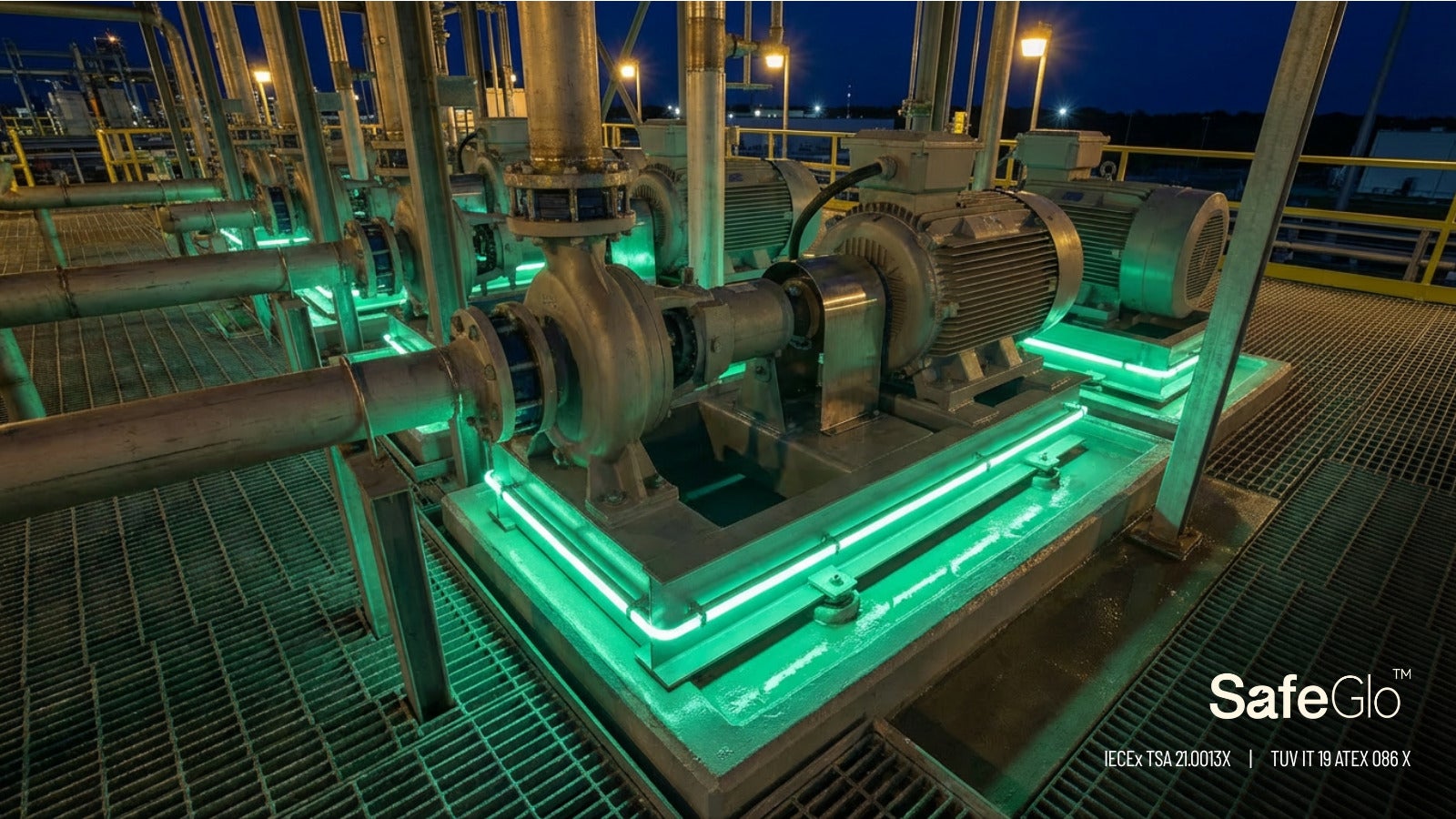
Targeted pump lighting for earlier detection of leaks and mechanical changes
Pump alleys contain small warning signs that are easy to miss when the inspection surface is in shadow. A trace leak at a seal, unusual residue, coupling-guard movement, damaged hardware, or a change around the baseplate can appear long before a major equipment problem. Task lighting aimed at the pump inspection zone reduces the chance that these early indicators disappear into a dark mechanical background.

The lighting is positioned around the seal, coupling, guard, bearing area, and service side of the pump. That keeps the operator’s attention on the components most likely to reveal deterioration. It also avoids the false confidence created by bright general lighting that leaves the actual check point under piping or behind a motor frame.
The lighting is positioned around the seal, coupling, guard, bearing area, and service side of the pump. That keeps the operator’s attention on the components most likely to reveal deterioration. It also avoids the false confidence created by bright general lighting that leaves the actual check point under piping or behind a motor frame.
Safety managers: reduces exposure to undetected leakage, poor housekeeping around rotating equipment, and maintenance activity beginning before hazards are visible.
Operations: prevents routine rounds from turning into superficial walk-bys because critical pump details cannot be seen from the normal inspection position.
Engineering: tackles deep shadows created by motors, pipework, guards, plinths, and adjacent pumps rather than adding another distant overhead fixture.
Procurement / ESG: reduces reliance on portable inspection lamps that are moved, dropped, damaged, and repeatedly replaced across the unit.
The key control is early recognition. A seal problem found during a normal round is a different event from the same problem found after loss of containment or equipment failure.
By keeping the inspection face visible, the lighting makes abnormal conditions harder to overlook. Technicians can assess staining, leakage, hardware condition, and access before placing hands or tools near the machine.
This creates a visual checkpoint around the pump, where maintenance risk is addressed before physical intervention begins.