
The Venus offshore development is an oil and gas project located off Namibia in the Orange Basin in the Atlantic Ocean.
TotalEnergies operates the licence with a 45.25% working interest, in partnership with QatarEnergy (30%), Impact Oil and Gas (9.5%) and the National Petroleum Corporation of Namibia (NAMCOR, 10%).
Recommended Buyers Guides

A final investment decision (FID) is scheduled to be taken in 2026. Offshore installation works are expected to commence within a year from the FID.
Production from the field is expected to run for around 21 years, with an option to extend operations by a further ten years.
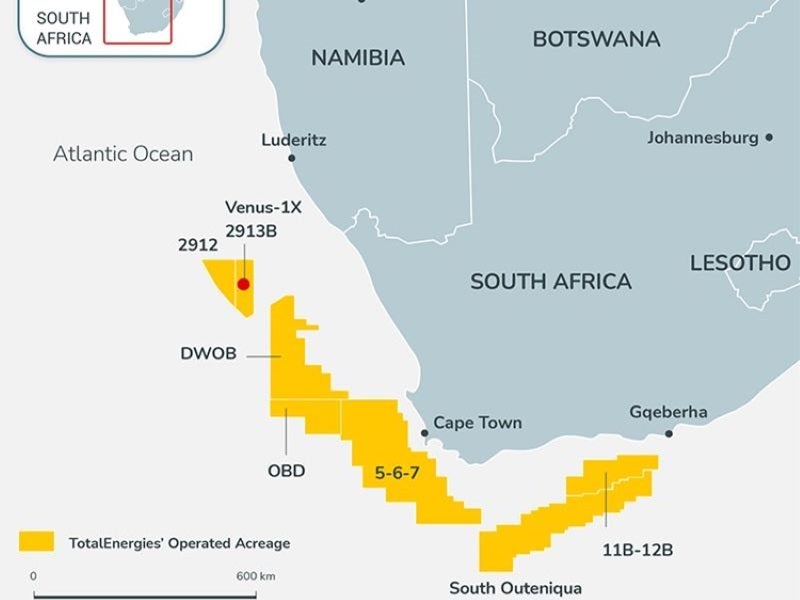
Venus offshore development project location
The Venus discovery lies in PEL56 Block 2913B, which covers roughly 8,215km² in the northern Orange Basin, around 290km offshore Namibia.
The field lies in water depths of approximately 3,000m adjacent to the South African maritime boundary.
The Orange Basin is also home to the Kudu gas field.
Development background
Block 2913B was originally owned by Black Star Petroleum (80%), along with NAMCOR (10%) and Southern Oil and Gas Explorers (10%)
In 2014, Impact Oil and Gas (Impact) secured an 80% interest in Block 2913B and became the licence operator through the acquisition of Black Star Petroleum, while NAMCOR and Southern Oil and Gas Explorers each held 10%.
Impact acquired 2D seismic data followed by 3D seismic, supporting the definition of the Venus prospect.
TotalEnergies entered the joint venture (JV) in 2017, taking a 70% interest in the block, while Impact retained 20% and NAMCOR held 10%. QatarEnergy entered the JV in 2019.
In January 2024, TotalEnergies agreed to acquire an additional 10.5% participating interest in Block 2913B from Impact, along with a further 9.39% participating interest in Block 2912, with both blocks operated by TotalEnergies. TotalEnergies also indicated that it intended to share these additional interests with QatarEnergy. The transaction was completed in November 2024.
In December 2025, TotalEnergies signed an agreement with Galp to rebalance interests across multiple Namibian licences. TotalEnergies is set to acquire a 40% operated stake in PEL83, which includes the Mopane discovery, while Galp is to receive a 10% participating interest in PEL56 covering the Venus discovery, plus a 9.39% participating interest in PEL91. The transaction is set to close in 2026.
An application for an Environmental Clearance Certificate was submitted to the Ministry of Industries, Mines and Energy (MIME) in February 2025 as the Competent Authority.
In January 2026, the Environmental and Social Impact Assessment (ESIA) report was submitted to the Ministry of Environment, Forestry and Tourism and MIME for review and determination.
Discovery and appraisal
In February 2022, TotalEnergies announced the Venus discovery of light oil with associated gas in Block 2913B offshore southern Namibia.
The Venus-1X exploration well was drilled by the Maersk Voyager drill-ship to a total depth of 6,296m, encountering around 84m of net oil pay in a good-quality Lower Cretaceous reservoir.
The first appraisal well, Venus-1A, was drilled around 13km north of Venus-1X by the Tungsten Explorer drill-ship. Venus-1A returned positive results after being drilled, cored and logged by the drill-ship to a total depth of 6,146m.
The Deepsea Mira semi-submersible drilling rig was used to re-enter and sidetrack the Venus-1X well, which produced oil during testing, with results reported as positive.
In a separate campaign, the Tungsten Explorer drilled the Mangetti-1X exploration well in the northern area of Block 2913B. In February 2024, the company reported that Mangetti-1X had intersected hydrocarbon-bearing intervals in the Mangetti fan prospect, described as a different system from the Venus oil discovery. The well also intersected and appraised the northern part of the Venus accumulation, and Mangetti was described as a potential contributor to recoverable resources in Block 2913B.
Venus field development plan
The Venus field development concept includes drilling up to 40 subsea wells, comprising 20 oil production wells and 20 gas injection wells.
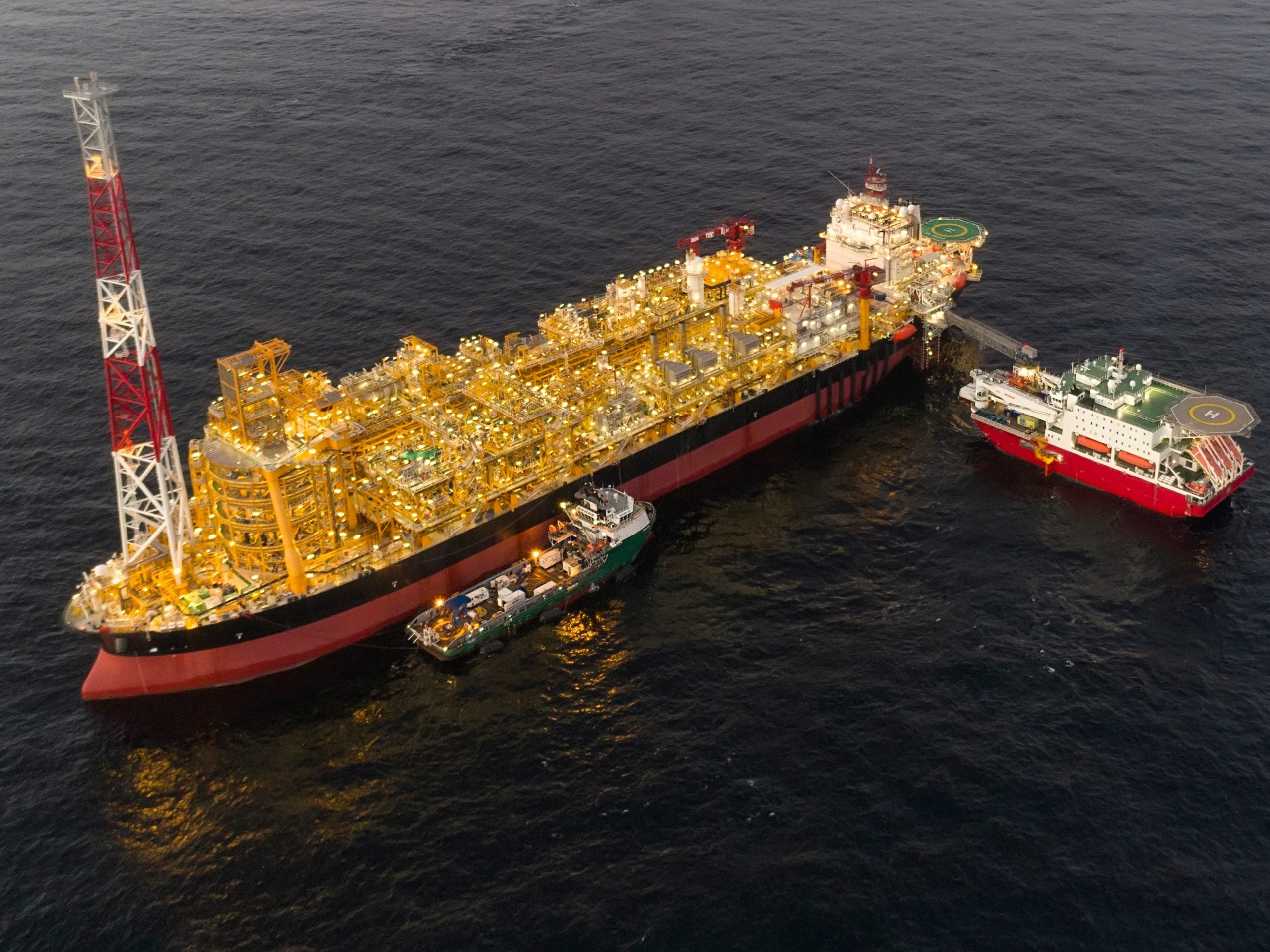
Fluids produced from the oil wells are expected to be processed on a floating production, storage and offloading (FPSO) vessel moored within the project area, where oil, gas and water will be separated. The separated gas will be reinjected into the reservoir through the injection wells.
Oil stored on the FPSO is set to be offloaded to a dynamic positioning shuttle tanker, which will travel to a nearshore transhipment area for transfer to a conventional tanker, using an approach comparable to the handling of imported refined products at the same location.
The transhipment area is stated to be roughly 5km from the coast and around 20km north of Walvis Bay. A mooring buoy is due to be installed in the same nearshore area, approximately 5km from the coast, around 20km north of Walvis Bay. The conventional tanker will transport the cargo onward.
Contractors involved
The project ESIA was prepared by SLR Environmental Consulting Namibia, a specialist environmental consulting company.
Petroleum Geo-Services (now part of TGS) was contracted in December 2016 to carry out a survey of Block 2913B, using the M/V Ramform Sterling and GeoStreamer® technology to acquire 3D seismic data.
Oilfield Production Consultants, a technical services consultancy, conducted geomodelling surveys on the field over a period of six months to construct a detailed static subsurface model of the field.
