

Doha Restaurant Blast Highlights Gaps in LPG Explosion Prevention at Petrol Stations
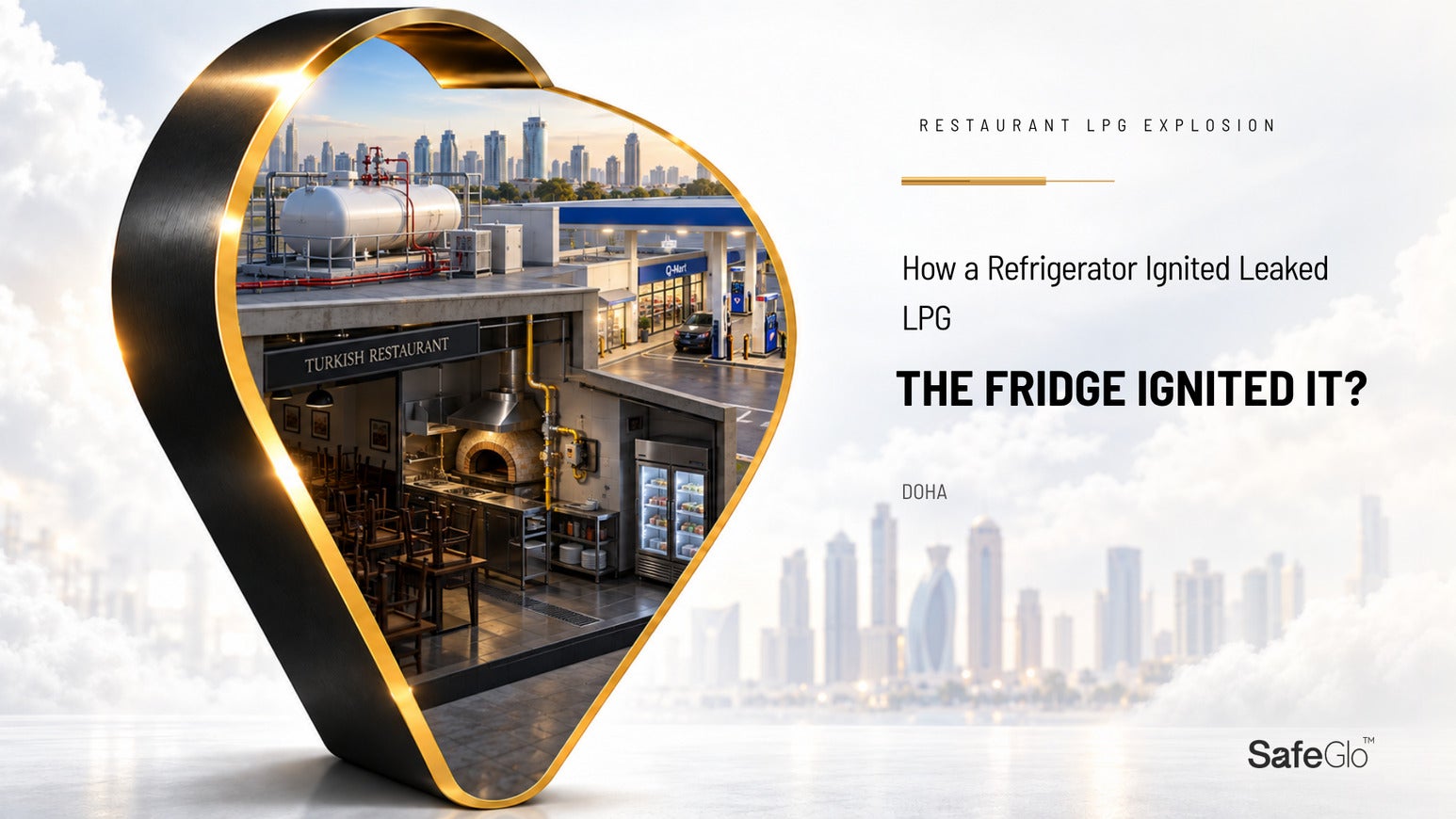
On 27 February 2014, a powerful explosion destroyed Istanbul Restaurant in a petrol station complex near Landmark Mall in Doha, Qatar. The Ministry of Interior investigation later reported that LPG had leaked from a pizza oven left open after the restaurant closed. The rooftop LPG storage tank itself had not exploded and remained largely intact. Gas accumulated inside the closed restaurant for hours and was then ignited by electrical current associated with a refrigerator. Contemporary official reporting cited 11 deaths and 35 injuries; later court reporting used a higher injury count.
The inquiry also exposed organisational conditions beyond the open oven. Court reporting described gas-line renovation, required inspections, an unauthorised or disputed reconnection sequence, and continued gas supply even though safety certification issues remained unresolved. The majority of victims were not inside Istanbul Restaurant; people in neighbouring premises and the surrounding area were caught by the blast. This matters for petrol-station risk because hazardous consequences do not respect the tenancy boundary between a restaurant, retail unit and fuel forecourt.
The risk chain to prevent
LPG is heavier than air and can accumulate in low or poorly ventilated areas. An unattended release inside a closed restaurant can create an explosive mixture long before anyone smells or sees a problem. Once that mixture reaches an ordinary electrical appliance, the ignition energy can be trivial. In this incident, the refrigerator was the identified electrical ignition mechanism. The lighting system was not reported as the trigger.
Safety managers
The primary controls are gas isolation, verified shutoff, leak detection where required, ventilation, inspection, competent gas work and clear responsibility between the restaurant, gas contractor, fuel supplier and site operator. SafeGlo should not be positioned as a product that would have prevented this incident by itself. Its relevance is limited to lighting installed in any classified areas around the fuel station or LPG system where ordinary lighting could otherwise become an ignition source. The restaurant’s leaking oven and refrigerator would still require separate controls.
Operations
Operations need closing procedures that physically verify gas appliances and isolate supply when premises are unattended, especially after maintenance or renovation. A checklist should not depend on one employee remembering that a valve was closed. Fuel-station management also needs escalation rules when a tenant’s gas system lacks inspection or certification. SafeGlo can support route, service-area and forecourt visibility without adding unsuitable lighting equipment to hazardous zones, but it does not supervise tenant gas shutdown.
Engineering
Engineering should define the hazardous-area boundaries for the petrol station and LPG installations, then ensure electrical equipment within those zones is suitable. A restaurant interior is not automatically an ATEX/Ex zone in normal use, but a credible LPG leak can create an abnormal explosive atmosphere and demands leak prevention and appropriate gas-system design. SafeGlo publishes hazardous-area gas-station lighting and Zone 1/2 options for specified products. Engineers must apply them only where the site classification calls for them and verify the exact certification. Gas detection, automatic isolation and ventilation design remain separate systems.
Procurement / ESG
Procurement should avoid a false sense of completeness from buying “explosion-proof lights” for a mixed-use fuel complex. The risk register includes cooking-gas equipment, refrigerators and other appliances, gas valves, detectors, ventilation, fuel dispensing equipment and maintenance contractors. SafeGlo can reduce the chance that the lighting package becomes another non-Ex electrical source in a classified zone and may reduce maintenance burden, but it cannot compensate for uncontrolled LPG supply.
Mixed-use fuel sites also create an ownership problem. The restaurant, gas supplier, maintenance contractor and forecourt operator can each control only part of the hazard chain. A defensible system assigns who verifies gas isolation, who inspects alterations, who accepts new connections and who can stop occupancy after a defect. SafeGlo fits the classified lighting package where required, but it cannot bridge missing responsibilities between separate businesses sharing one site.
SafeGlo’s role in this environment
The Doha case is useful because it shows the boundary of lighting intervention. SafeGlo can be specified for hazardous fuel-station zones to provide certified, adaptable illumination. It cannot stop an oven valve being left open or make an ordinary refrigerator safe in an LPG cloud. The strongest SafeGlo message here is disciplined scope: remove lighting as one potential ignition pathway while the gas-safety system prevents the explosive atmosphere from forming in the first place.
Research sources
- The Peninsula Qatar – Ministry of Interior inquiry findings, 25 Mar 2014: https://thepeninsulaqatar.com/article/25/03/2014/gas-from-open-pizza-oven-caused-restaurant-blast
- Doha News – inquiry findings, 24 Mar 2014: https://dohanews.co/oven-leaking-lpg-caused-last-months-deadly-gas-blast-officials-say/
- The Peninsula Qatar – defendants/negligence details: https://thepeninsulaqatar.com/article/24/04/2014/defendants-in-blast-case-freed
- SafeGlo – oil and gas/gas station lighting: https://safeglolight.com/oil-and-gas-lighting/