
LPG Pump Room Explosion Strengthens the Case for Explosion-Proof Temporary Lighting in Propane Hazardous Areas
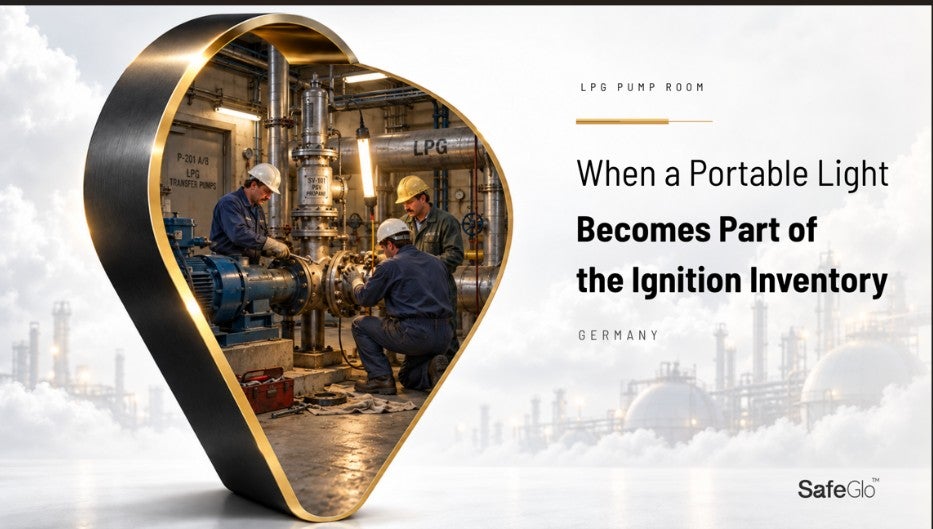
Propane leak meets an unprotected fluorescent work Light: A Preventable hazardous-area lighting failure
The ARIA record is unusually direct about the ignition path. At about 08:00, a deflagration occurred in the pump room of a liquefied flammable-gas storage installation in Ebersbach. The unit had been taken out of service after a technical inspection so that a safety valve on the pump-room discharge line could be replaced. While installers loosened flange bolts, propane escaped.
The release ignited on an unprotected fluorescent tube being used as a work light. The event produced a deflagration in the enclosed room, injuring all three installers, one seriously. Site personnel extinguished the resulting fire with internal resources.
This is a different lighting case from the French refinery event because the work light is not merely a possible ignition source. It is identified in the ARIA summary as the point where the propane ignited. The environment also magnified the consequences. The leak occurred during maintenance on gas service equipment, inside a pump room rather than an open process deck.
LPG vapours can accumulate in poorly ventilated low areas, and an enclosed room gives a developing gas cloud less opportunity to disperse. Maintenance itself creates additional vulnerability because flanges are being opened, equipment is being disturbed, and normal containment boundaries are intentionally changed.
Safety managers: the central risk is introducing a non-protected electrical light into an area where a flammable-gas release is foreseeable. The control should be defined before the job starts: isolation, depressurisation, verification of gas-free conditions, ventilation, atmospheric testing, exclusion of unsuitable ignition sources, and a permit or work-control process appropriate to the site.
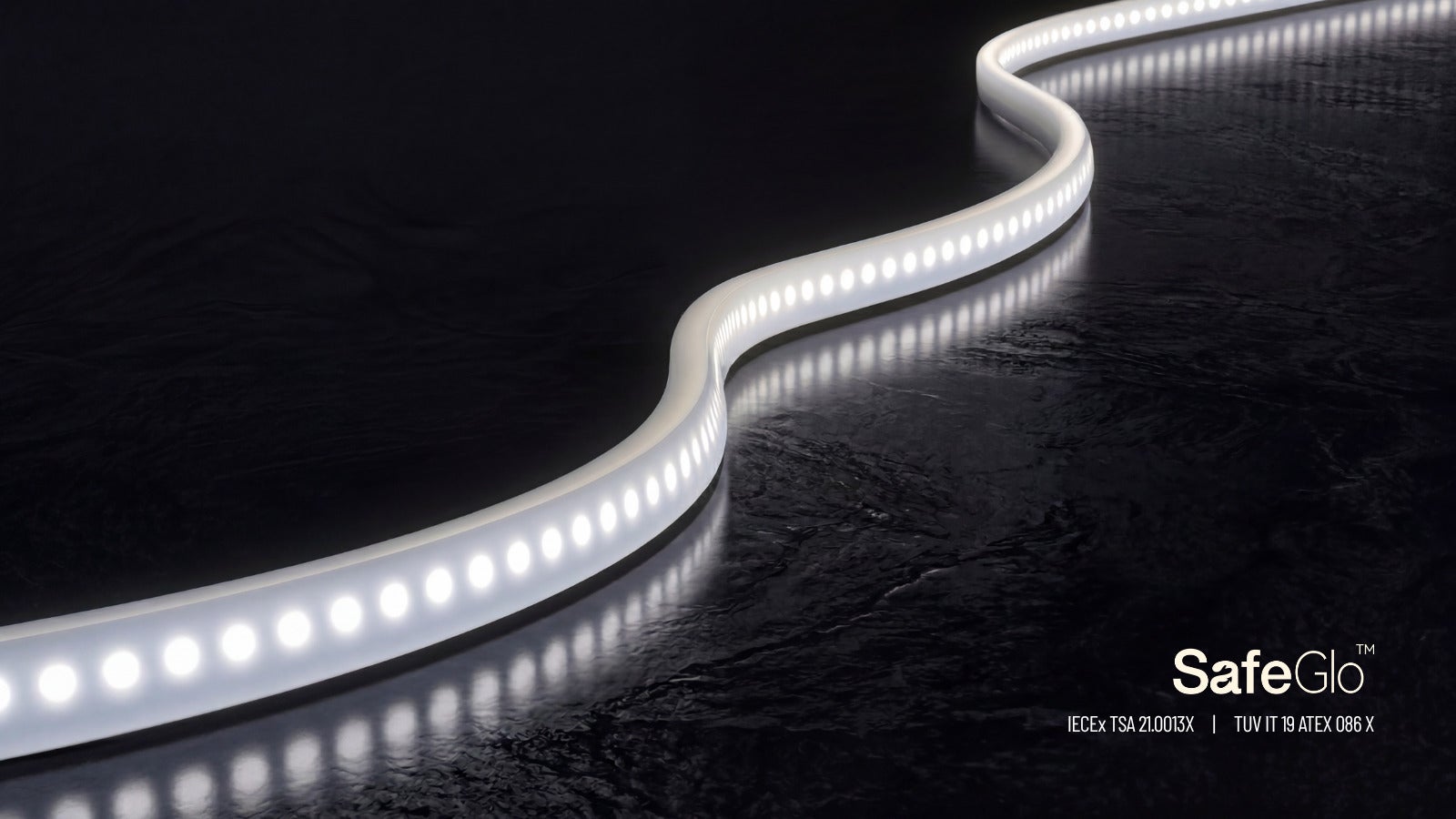
SafeGlo’s relevant contribution is narrow but important. Where the selected configuration is certified for the exact hazardous zone and gas group, it can remove the need for an ordinary fluorescent work tube at the maintenance point. That reduces one preventable ignition source. It does not make flange opening safe if propane is still available to escape.
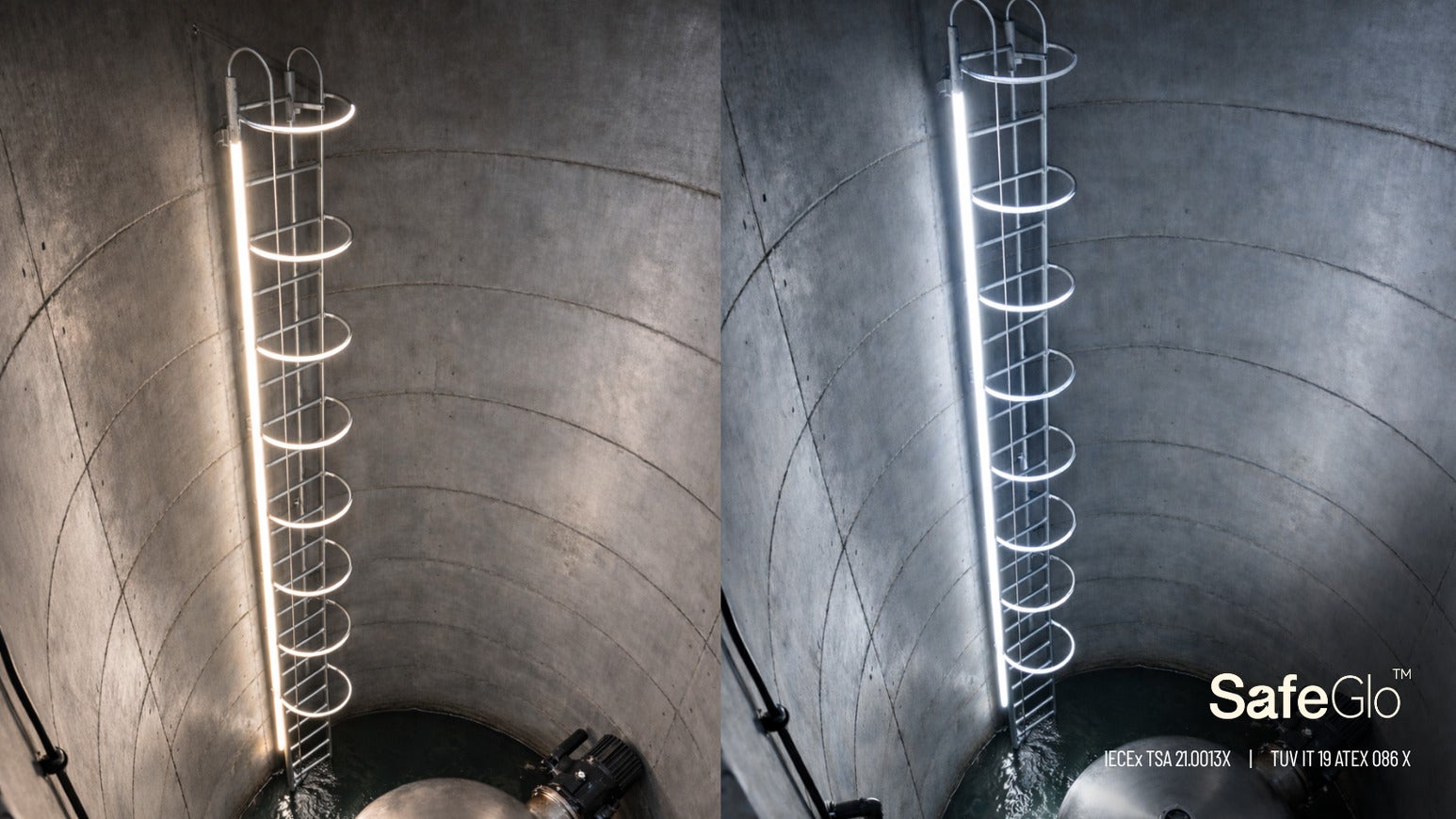
Operations: temporary maintenance lighting often enters the job late, after the mechanical scope has already been planned. That is how a familiar workshop light can migrate into a hazardous room. A permanent or standardised certified lighting layout changes the operating behaviour. The light is already where technicians need to read flange alignment, valve position, bolt condition, tools, escape routes, and floor obstructions.
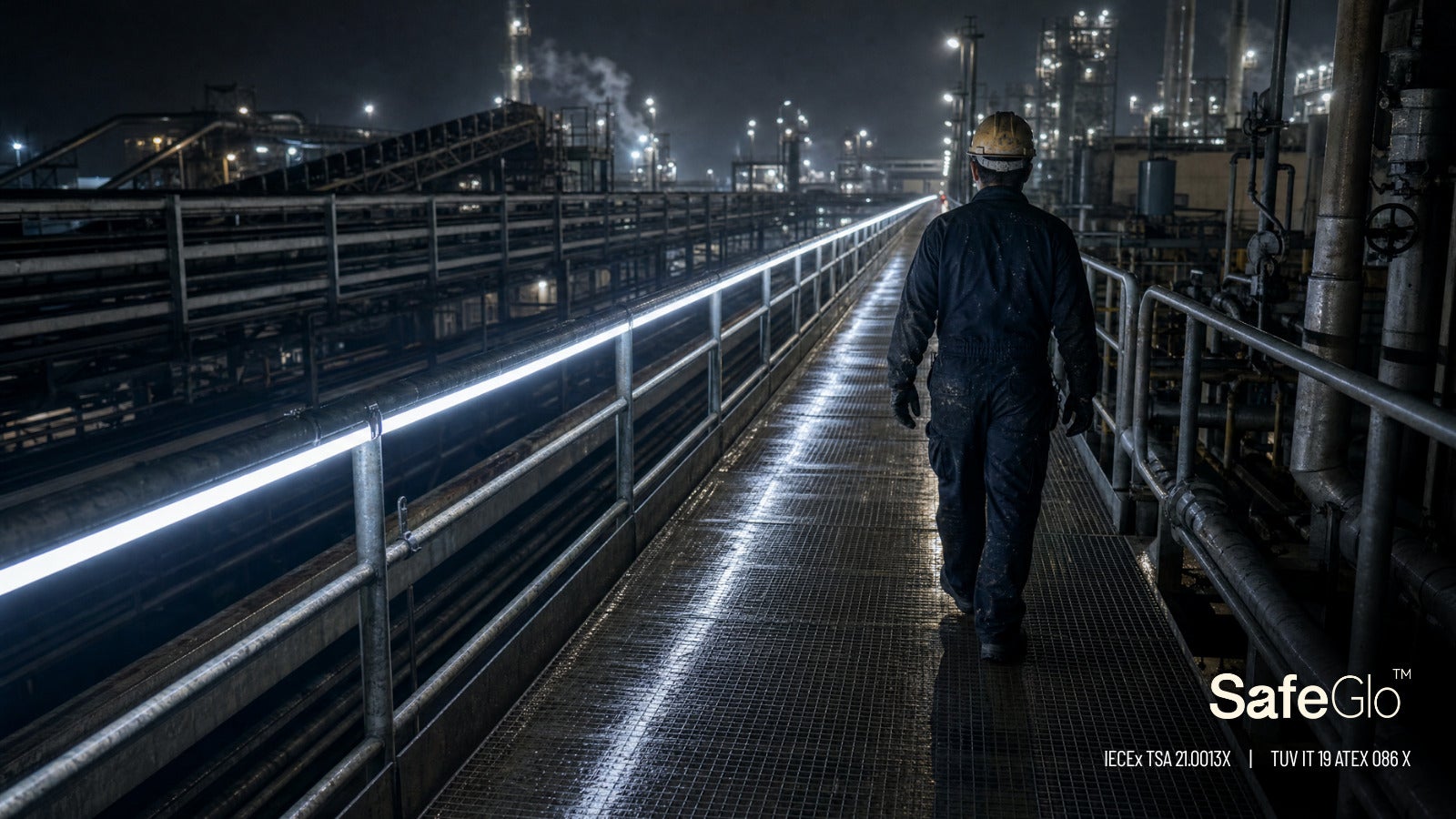
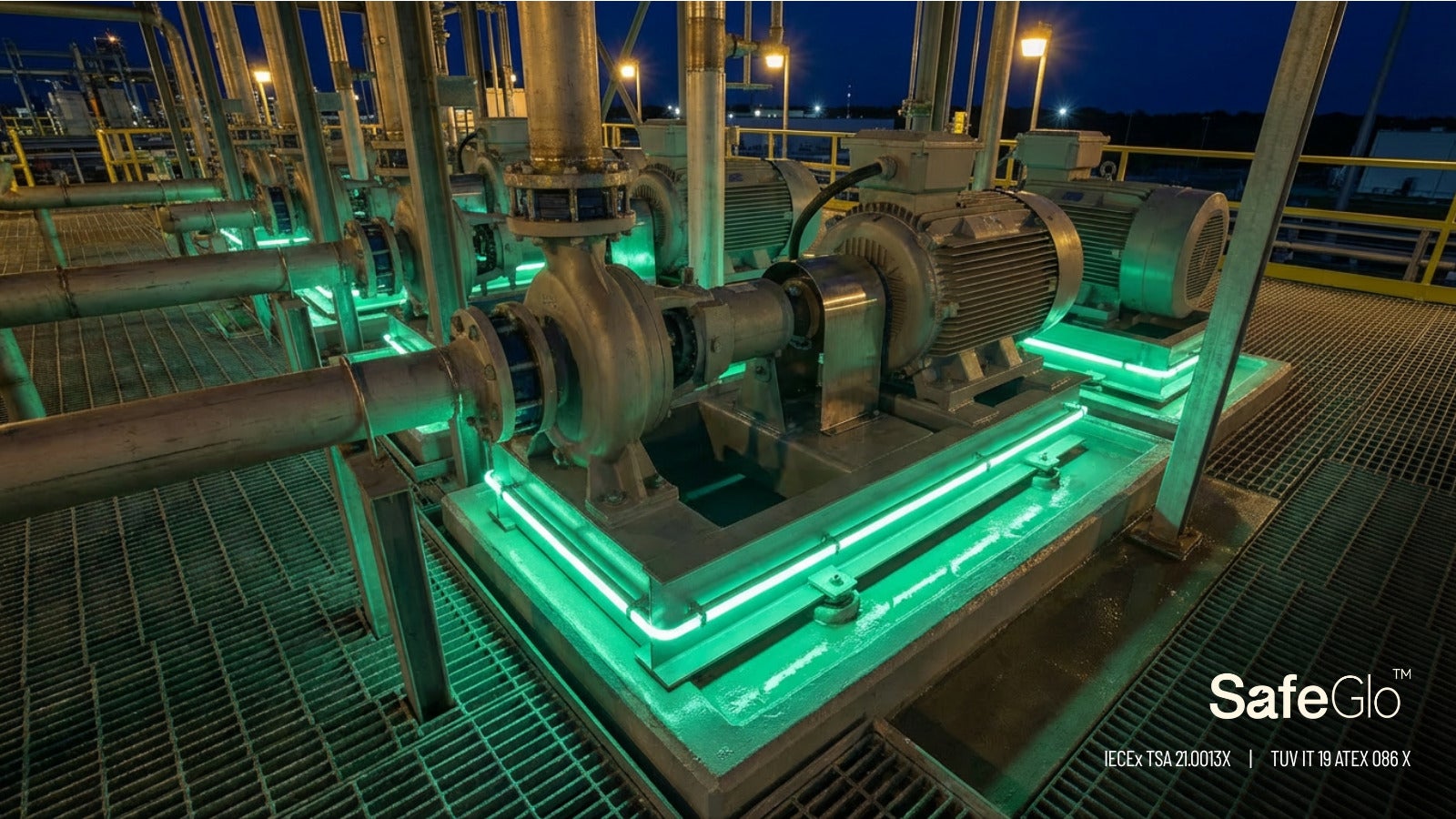
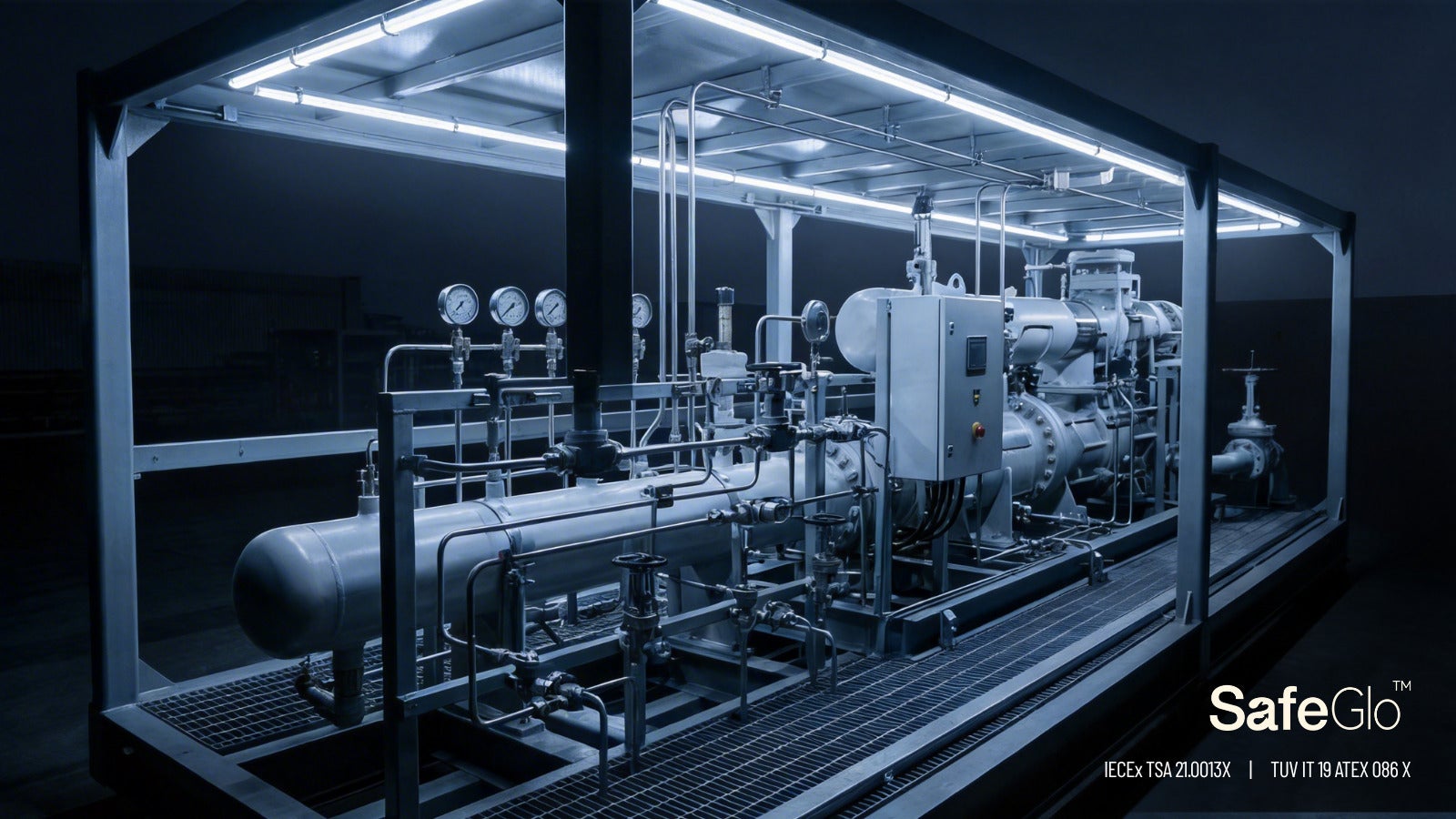
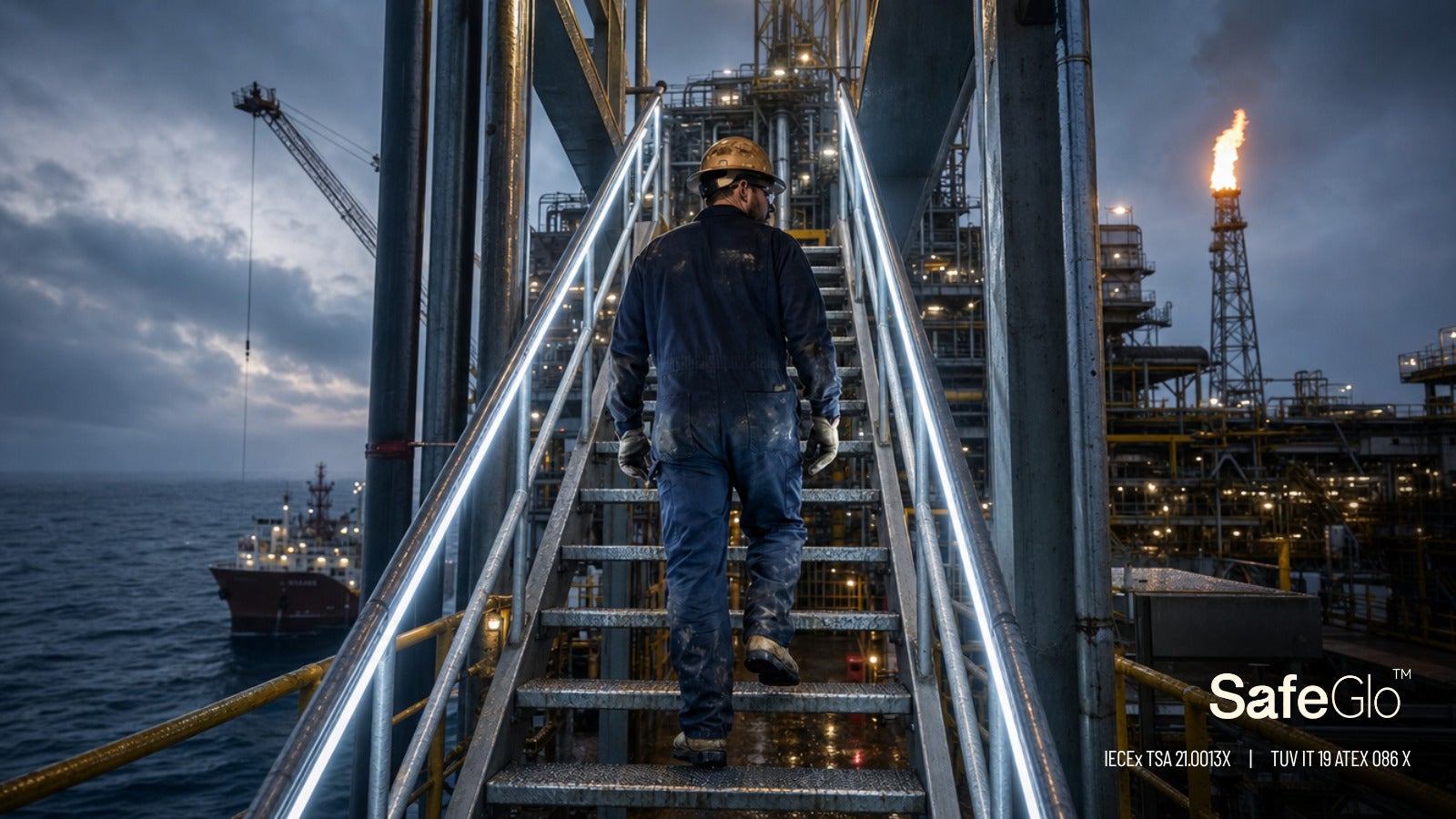
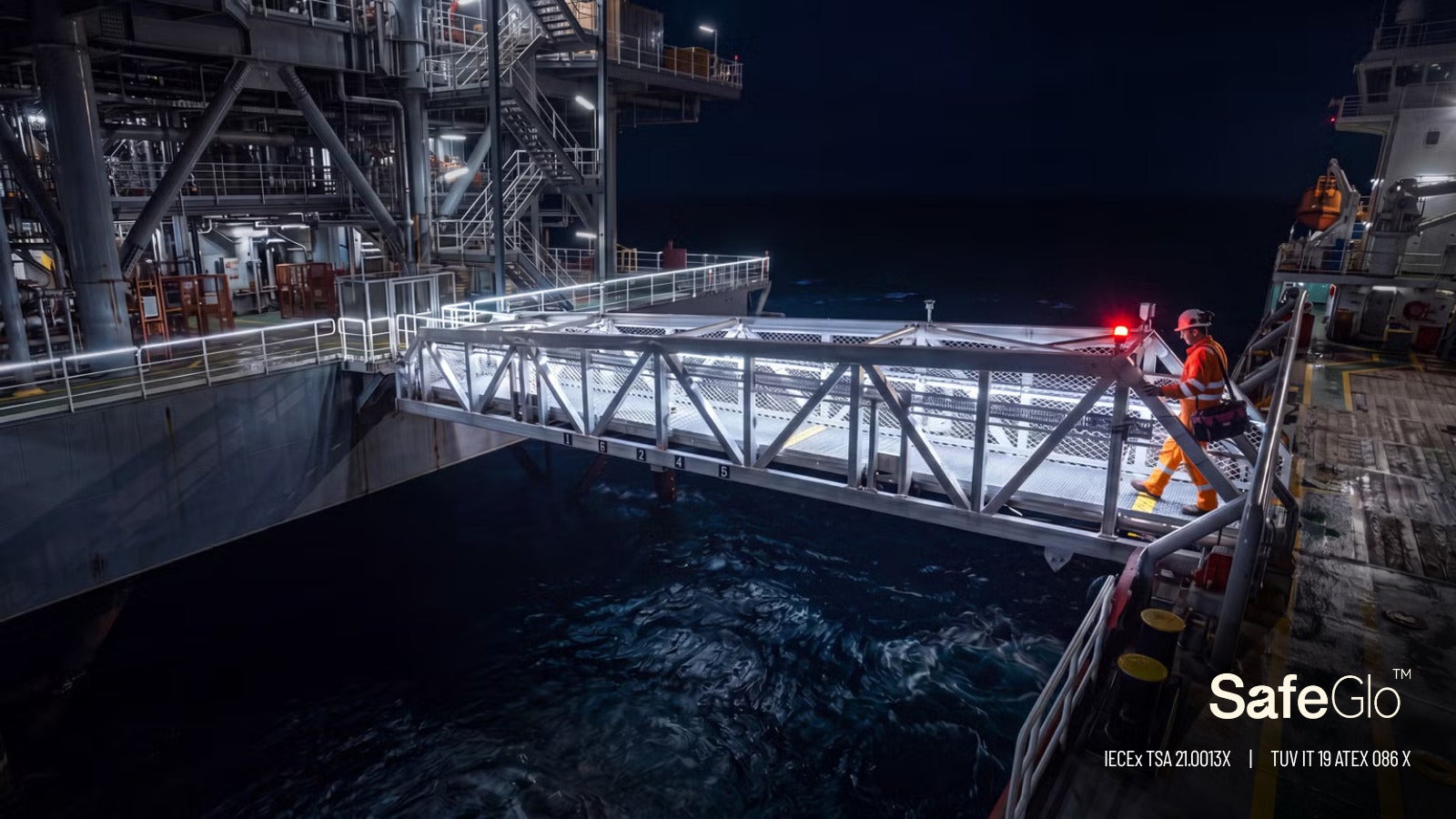
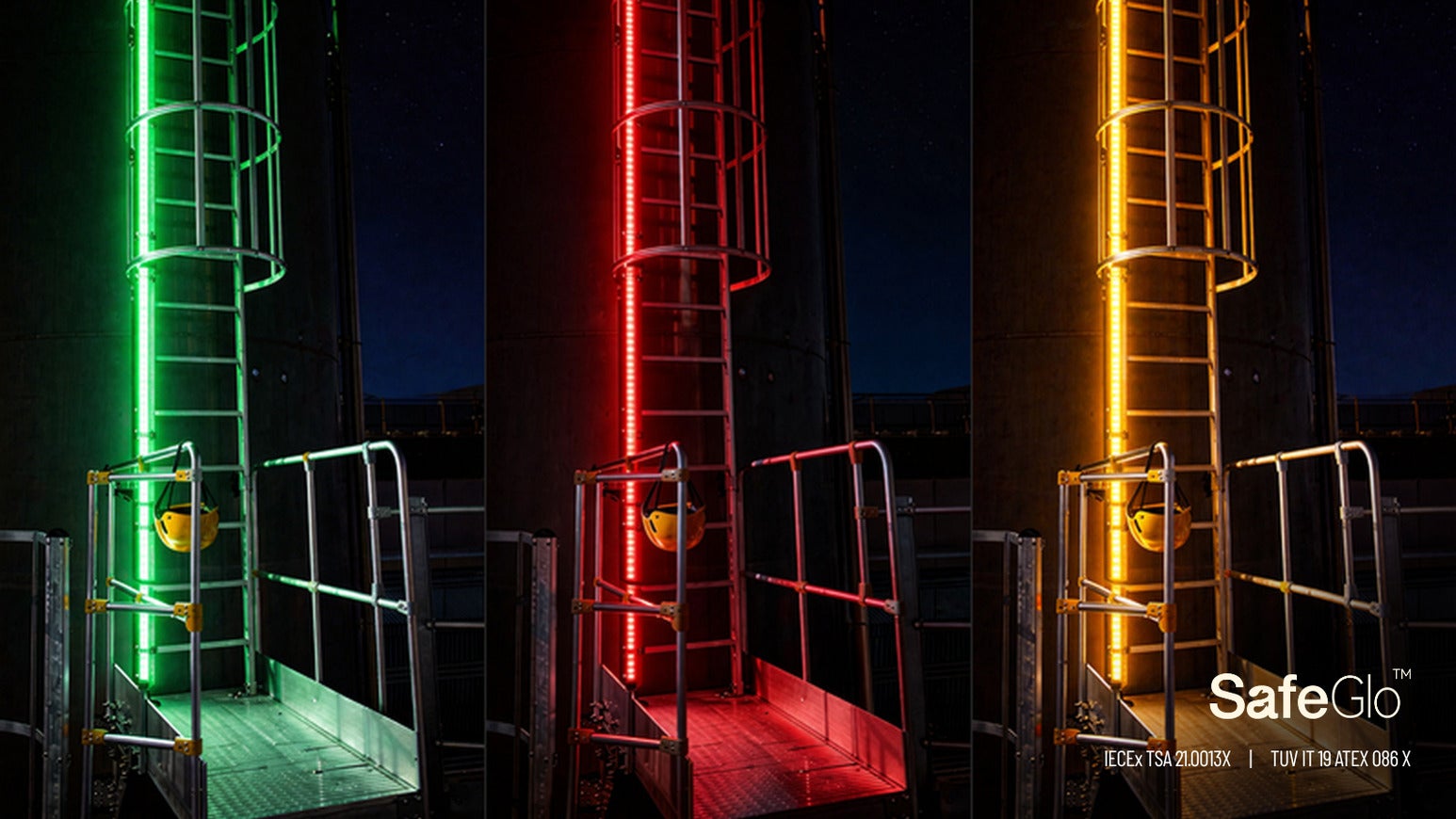
SafeGlo’s flexible linear geometry can be mounted around skid frames, pipe supports, handrails, or access edges where a rigid fitting leaves blind spots. The operational benefit is fewer improvised lamps, extension arrangements, and last-minute substitutions during a shutdown task.
Engineering: this case is fundamentally about equipment selection and area classification. In European hazardous areas, a product must be matched to the zone, gas group, temperature class, equipment protection level/category, ambient range, and the installation conditions on its certificate. SafeGlo publishes ATEX and IECEx certification for applicable flexible systems and states Zone 1/2 capability, Ex m encapsulation, and specified temperature ratings on selected products.
Those claims need to be verified against the exact model being procured. Propane is not a justification to simply specify “explosion-proof.” The engineering package must also cover glands, connectors, power supplies, earthing where applicable, mechanical protection, mounting, and inspection after maintenance.
Procurement / ESG: the purchasing failure in this scenario would be treating a generic work light as a low-cost consumable with no hazardous-area consequence. A safer procurement model removes non-rated portable lights from the approved equipment list for classified rooms and standardises certified alternatives with traceable documentation.
SafeGlo may also reduce the number of rigid temporary fixtures needed because one flexible run can follow the structure around a maintenance zone. Its published F1-rated silicone and industrial durability features are relevant where oil, moisture, vibration, and repeated handling are expected. The procurement team should still require certificate numbers, product markings, ambient-temperature limits, accessories approved under the certification, maintenance instructions, and replacement rules.
What this case teaches: the ignition source was not an obscure process phenomenon. It was a work light that did not belong in the environment. SafeGlo can be clearly differentiated here as a hazardous-area lighting system intended to replace that category of improvised illumination, provided the specific configuration matches the site classification.
The larger safety system remains isolation, gas control, ventilation, testing, and disciplined maintenance planning. Certified light removes one ignition mechanism; it does not remove propane.
Research sources
- BARPI/ARIA, Accident 19328: https://www.aria.developpement-durable.gouv.fr/accident/19328_en/?lang=en
- HSE, DSEAR: https://www.hse.gov.uk/fireandexplosion/dsear.htm
- HSE, Electricity in potentially explosive atmospheres: https://www.hse.gov.uk/electricity/explosive.htm
- SafeGlo, flexible explosion-proof LED system: https://safeglolight.com/flexible-exproof-light/
For more information, please visit https://www.offshore-technology.com/contractors/design-engineering-construction/safeglo