
Fuel Tank Explosion Puts Explosion-Proof Confined-Space Lighting and Reduced Portable Lamp Handling in Focus
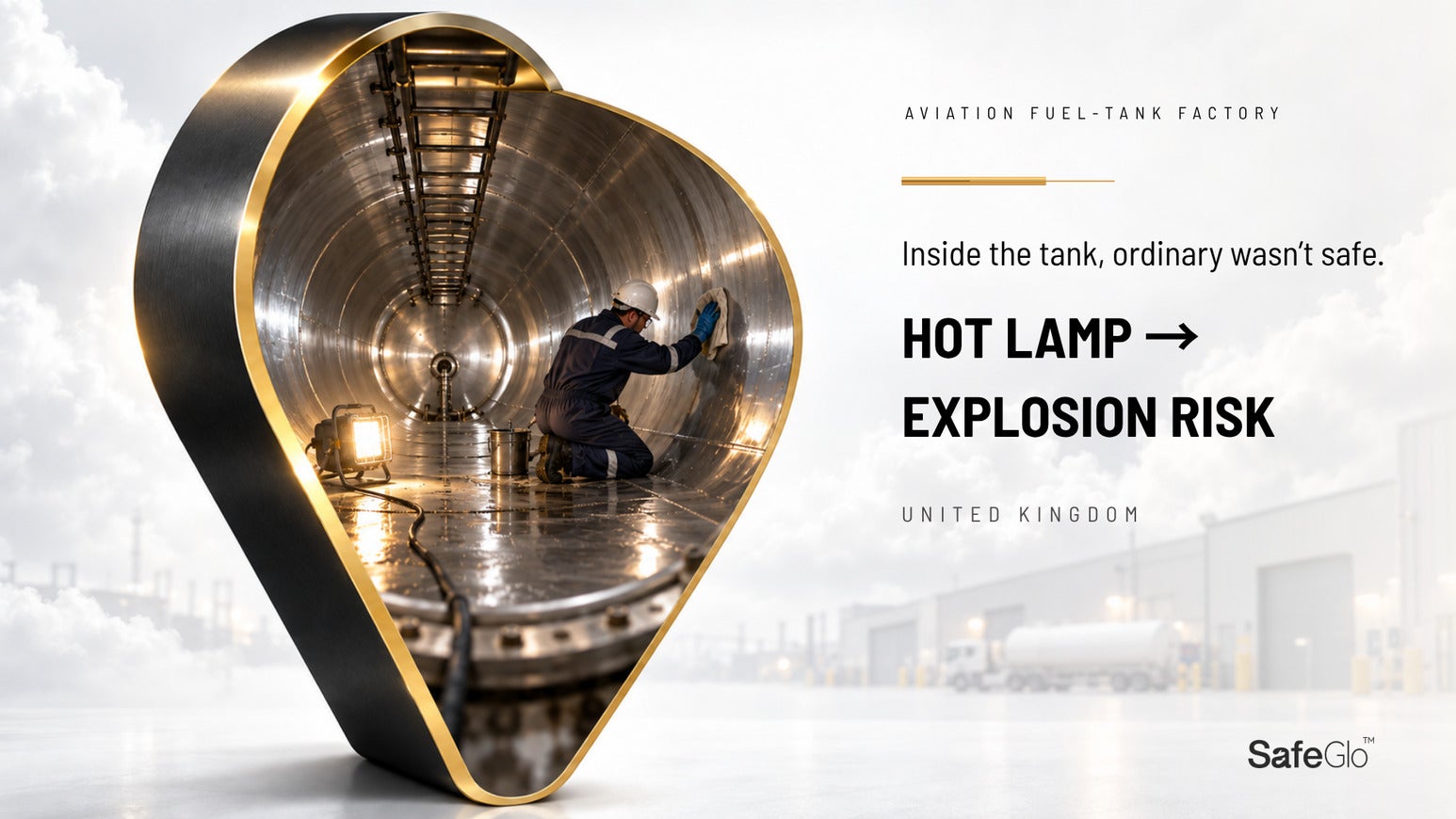
Inside a 20,000l fuel tank: Why portable lamp handling and solvent vapour should never share the same work method
This incident shows why hazardous-area lighting cannot be separated from the method of work. A 38-year-old employee was cleaning the inside of a 20,000l fuel tank, or bowser, at Fuel Proof Ltd in Heysham.
The tank was around six metres long and had to be extremely clean before delivery for aviation use. The worker entered through the top manhole and wiped the internal surfaces with a highly flammable solvent applied to a cloth. When the lamp inside the tank became hot, he pulled its plug from the socket. The disconnection produced a spark that ignited the solvent fumes.
A fireball surrounded him, and flames were reported above the manhole. He suffered extensive burns and was left almost completely paralysed.
The HSE investigation findings reported at prosecution make the environmental failure wider than the lamp. The solvent-cleaning method had reportedly been used since 2007 without a risk assessment.
There was no supervision of workers, no monitoring of fumes inside the tank, and the masks and lighting provided were described as entirely unsuitable. Workers took turns cleaning because vapour buildup made them feel sick. After the incident, the company changed the cleaning method to soapy water, demonstrating that the flammable solvent itself was not essential to the task.
Safety managers: the primary control is substitution. If a non-flammable cleaning method can achieve the required cleanliness, the explosive atmosphere can be removed from the task rather than managed after it forms. UK DSEAR guidance follows that hierarchy: remove or reduce the dangerous substance, prevent or control releases, ventilate, and avoid ignition sources.
Confined-space guidance adds another layer. Tank entry should be avoided where possible, and when unavoidable, it requires a safe system of work, effective ventilation, suitable gas testing, emergency arrangements, and specially protected lighting where flammable atmospheres are possible. SafeGlo fits only after those decisions. It can replace an unsuitable hot portable lamp with a certified lighting system, but it cannot justify keeping a solvent process that should have been eliminated.
Operations: The incident reveals several warning signals before the fireball. The lamp was getting hot. Workers felt sick from vapour buildup. Cleaning had to be rotated between people. Those are operational indicators that the job design was unstable.
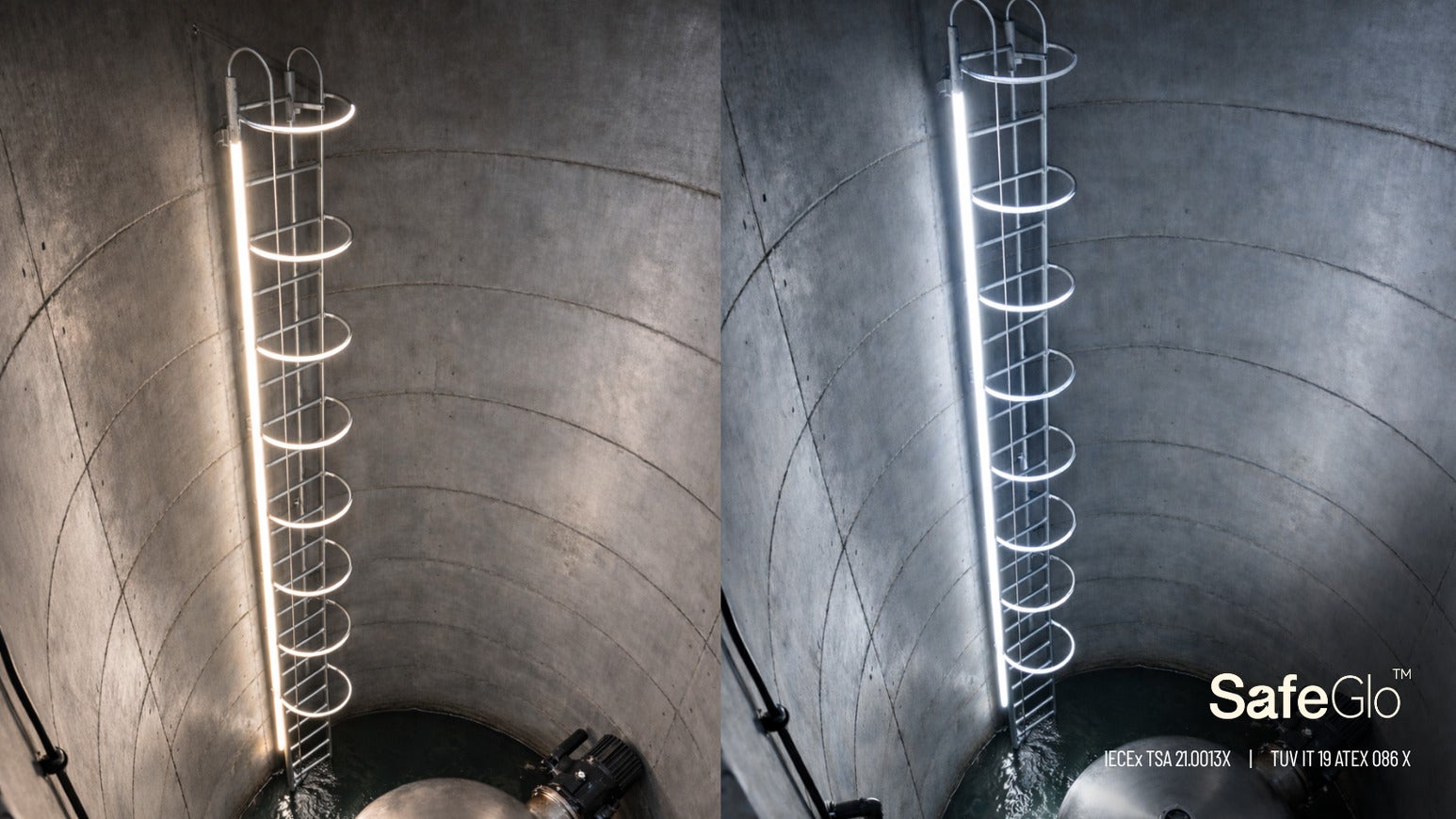
A better lighting system should remove extra handling inside the vessel: no lamp that needs to be repositioned repeatedly, no plug that must be disconnected inside the vapour space, and fewer loose components occupying the manhole route.
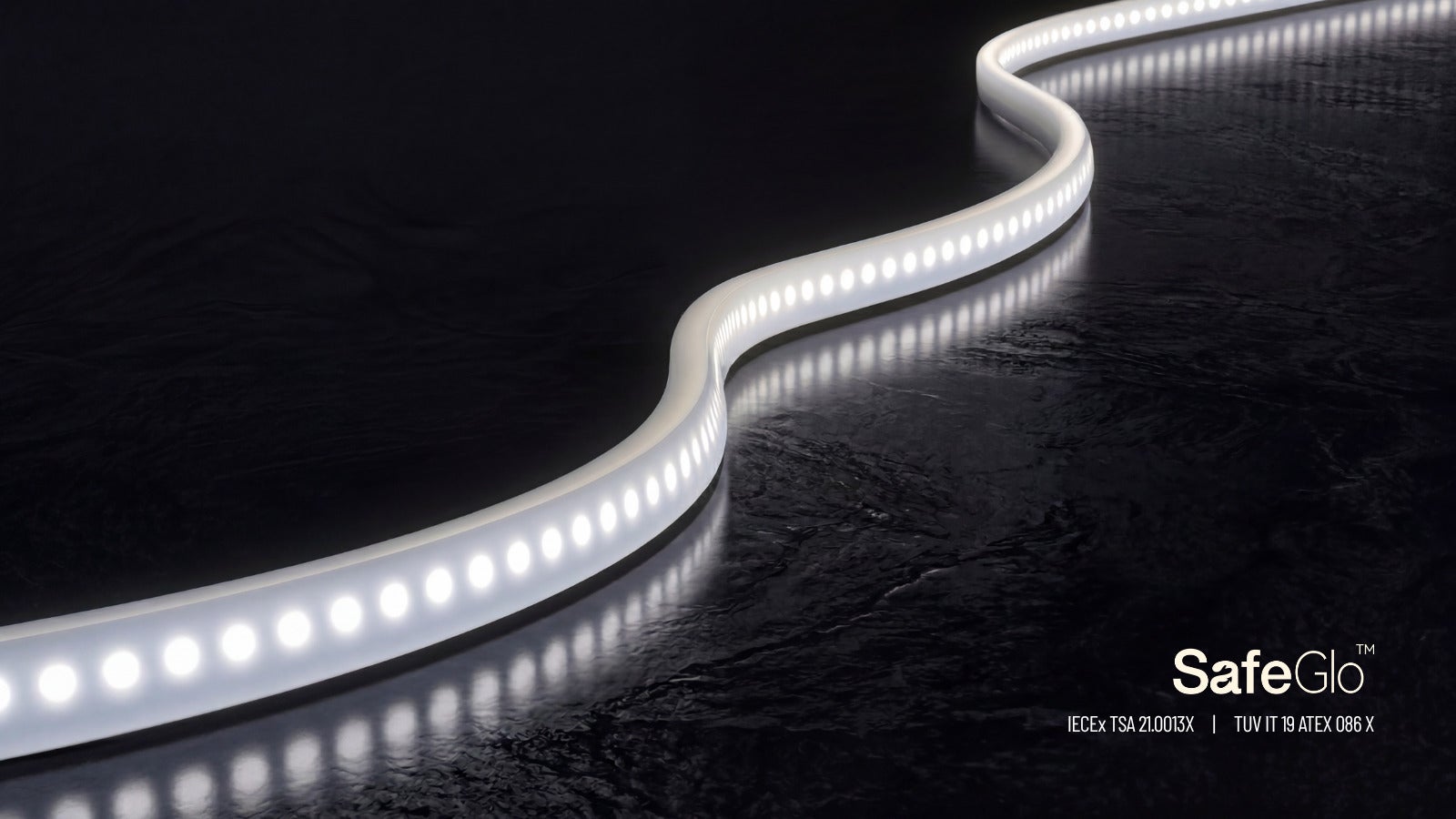
SafeGlo’s flexible linear format can potentially place light along the vessel geometry or at a protected access arrangement, but the exact temporary-tank-entry configuration, cable routing, supply location, voltage, and hazardous-area certification would need a competent engineering review.
Engineering: HSE guidance for confined spaces states that specially protected lighting is essential where a flammable or potentially explosive atmosphere is likely. It also notes that in metal tanks, extra-low-voltage equipment may be appropriate as part of electric-shock precautions.
DSEAR guidance for higher-risk tank cleaning emphasises ventilation and continuous atmosphere monitoring, with a target of keeping dangerous substance concentration below 10% of the LEL where workers enter.
The engineering design has to integrate lighting with gas detection, ventilation, isolation, electrical supply, cable protection, access and egress, and rescue planning.
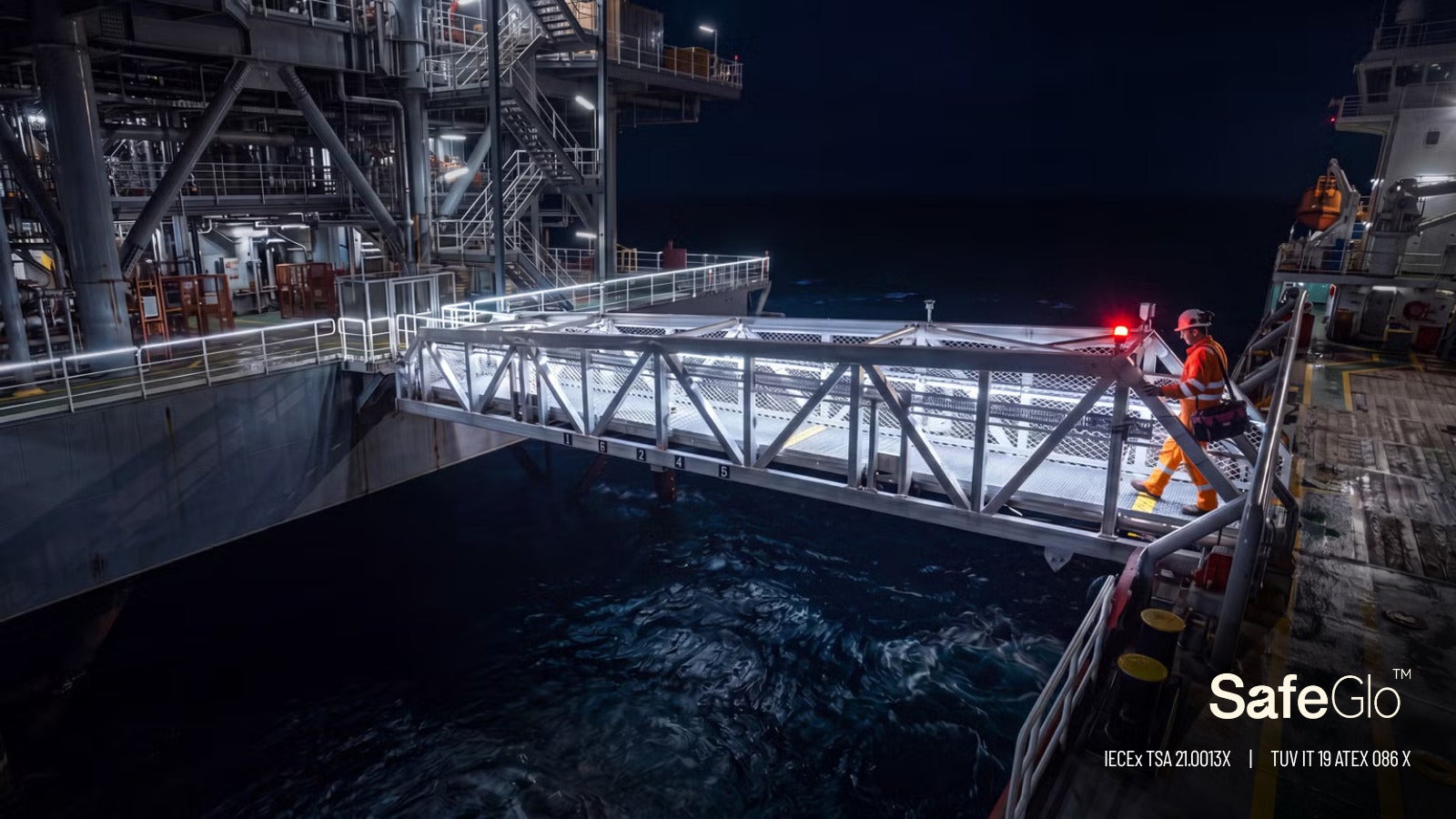
SafeGlo publishes ATEX/IECEx-certified flexible systems, but the selected unit must be proven suitable for the specific zone, solvent vapour, temperature class, and temporary installation method.
Procurement / ESG: the case demonstrates the cost of buying task equipment without controlling the process it enters. Procurement should not approve a lamp merely because it is portable and bright. It should require documented hazardous-area suitability, compatible power supplies and connectors, mechanical protection against snagging, inspection requirements, and a clear rule for damage or overheating.
SafeGlo can be differentiated by its flexible encapsulated construction, published hazardous-area certifications, and material-durability features.
The ESG decision is also upstream: eliminating unnecessary solvent use can reduce hazardous chemical consumption, worker exposure, ventilation demand, and waste far more than changing the lamp alone.
What this case teaches: the spark from the lamp was the immediate ignition event, but the deeper failure was allowing a flammable confined-space atmosphere to become normal work. SafeGlo can remove an unsuitable lighting device from that chain. The strongest risk-aversion strategy is still to redesign the cleaning process so the explosive atmosphere does not exist in the first place.
Research sources
- ITV News, HSE prosecution report on Fuel Proof Ltd: https://www.itv.com/news/granada/2013-10-29/lancashire-firm-fined-after-explosion-left-man-paralysed
- HSE, DSEAR: https://www.hse.gov.uk/fireandexplosion/dsear.htm
- HSE, Confined spaces: a brief guide: https://www.hse.gov.uk/pubns/indg258.pdf
- HSE, DSEAR ACOP L138: https://www.hse.gov.uk/pubns/priced/l138.pdf
- SafeGlo, flexible explosion-proof LED system: https://safeglolight.com/flexible-exproof-light/
For more information, please visit https://www.offshore-technology.com/contractors/design-engineering-construction/safeglo