
Gasoline Tank Hazardous-Area Lighting: When an Ex-Rated Lamp Is Still Vulnerable to Handling Risk
An explosion-protected lamp was already in use. The work system still failed.
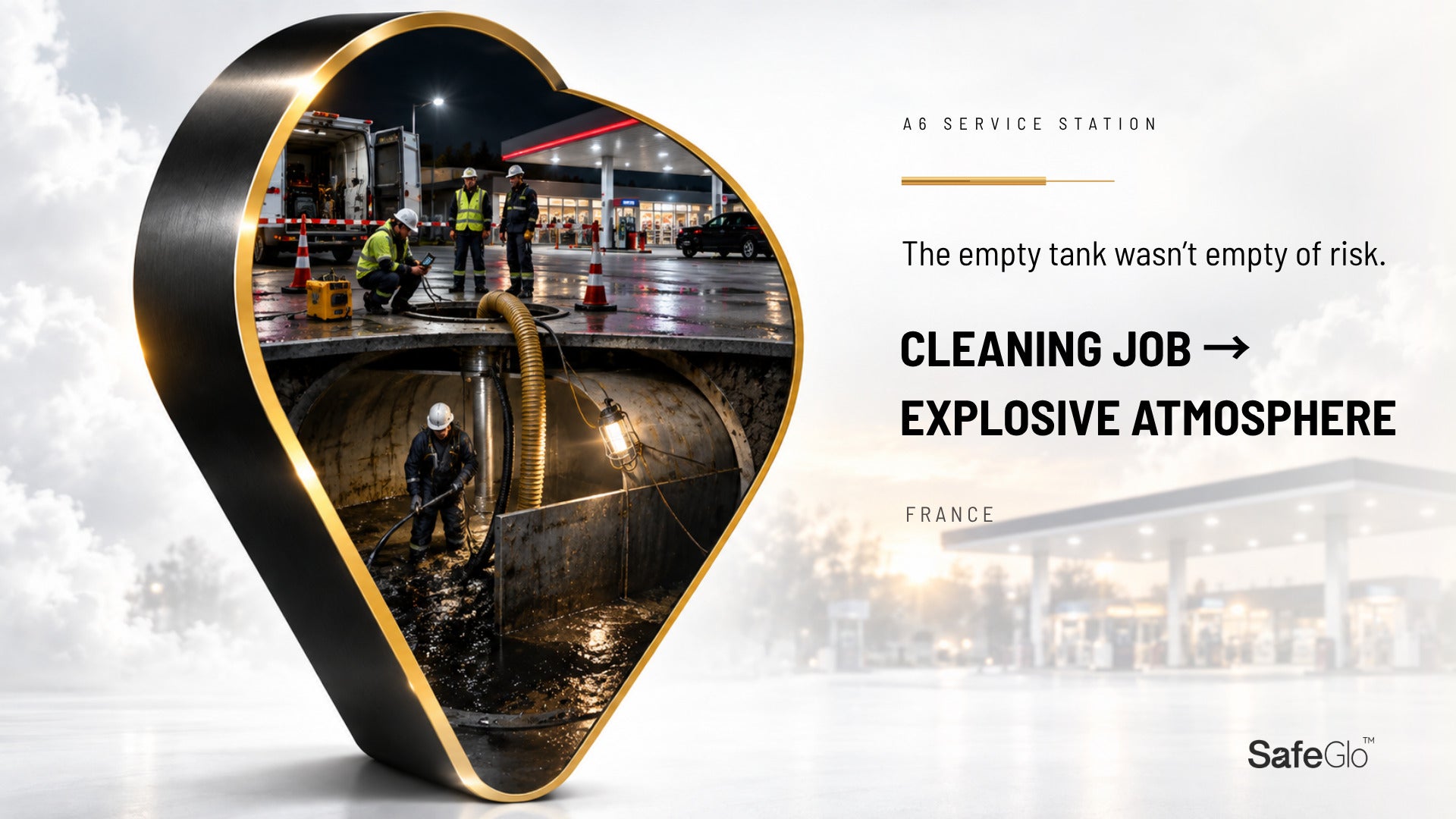
This event is useful because the lamp was described as explosion-protected, yet the work still ended in an explosion. At about 16:00, an unleaded-gasoline tank at an A6 motorway service station was being neutralised and cleaned.
Four subcontractor employees were burned, two seriously. The service area was temporarily closed, and the station remained closed to the public.
The work passed through several subcontracting tiers. Piping was disconnected at the manhole and extraction equipment was installed. An explosimeter initially showed an explosive atmosphere, so additional extraction was introduced.
After about twenty minutes, the detector no longer indicated an explosive atmosphere and was removed. A worker entered and cleaned the tank. During demobilisation, an operator pulled on the cable of an explosion-protected lamp that had become stuck on an internal partition. The explosion followed.
ARIA does not identify a specific internal lamp defect, so this should not be reduced to ‘the certified lamp failed.’ What the sequence establishes is mechanical stress on the lamp cable while continuous vapour monitoring had already stopped.
The investigation also found management failures. The prevention plan had been prepared remotely and was not communicated through the lower subcontracting tiers, and the pre-job analysis did not define controls to be maintained during the work. ARIA states that continuous vapour measurement was required for tank entry, but that procedure had not reached the lower-tier contractors.
Safety managers: certification does not survive poor work control automatically. An Ex-rated light remains protective only while its enclosure, cable, seals, terminations and installation remain within certified condition.
Pulling a trapped cable can introduce strain or damage that may not be visible. More importantly, one acceptable gas reading before entry cannot replace continuous monitoring when the atmosphere can change.
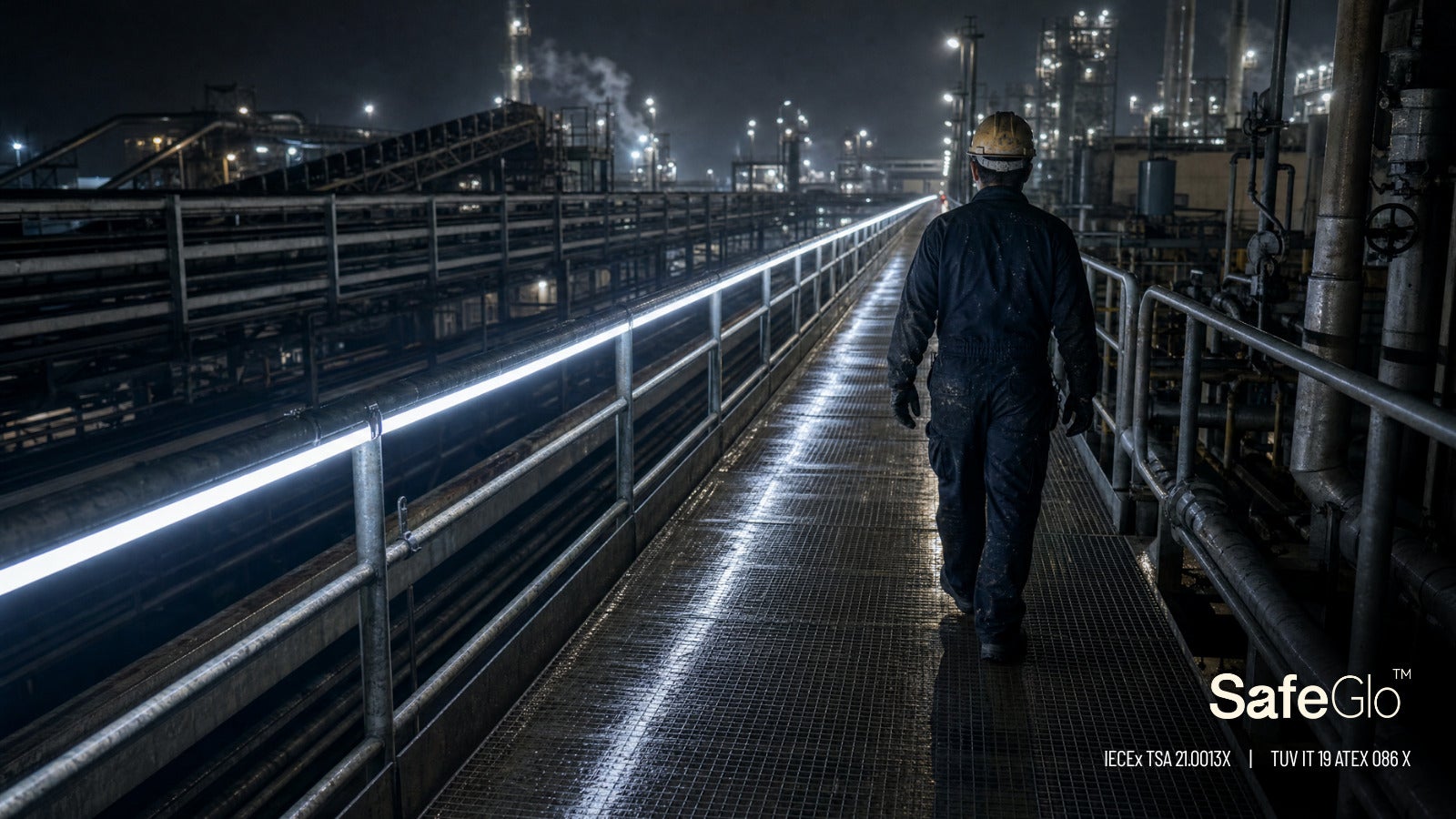
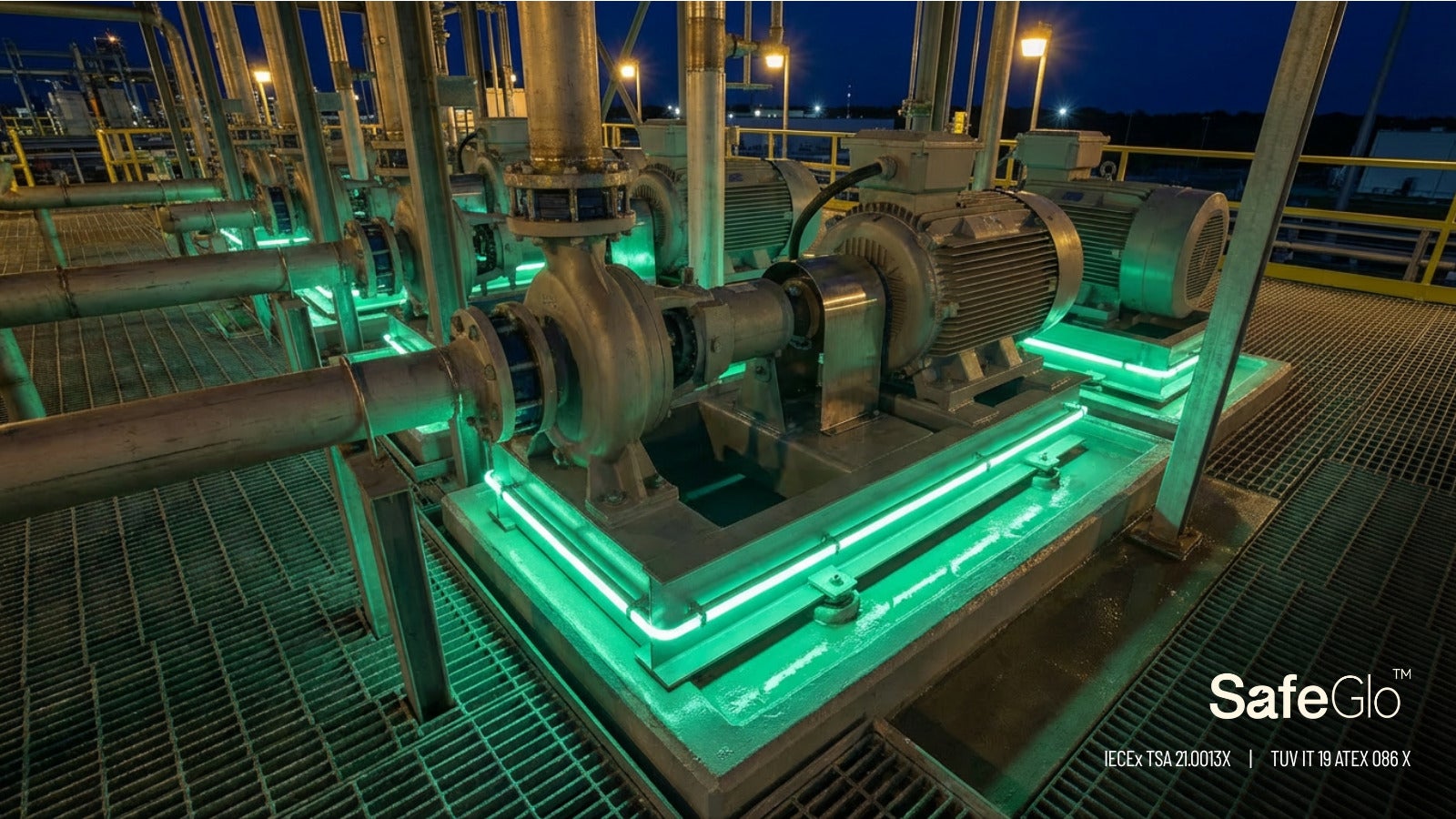
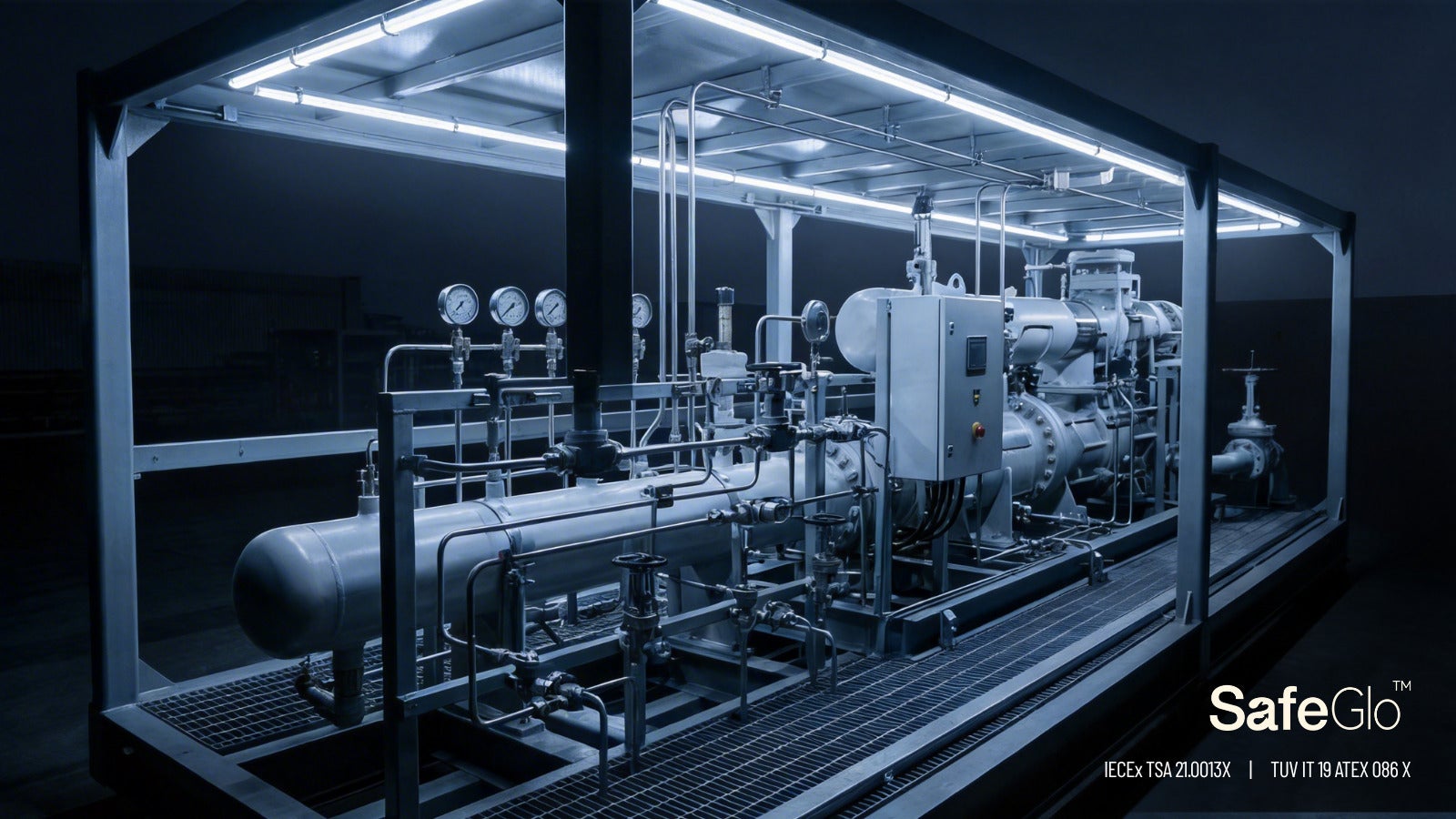
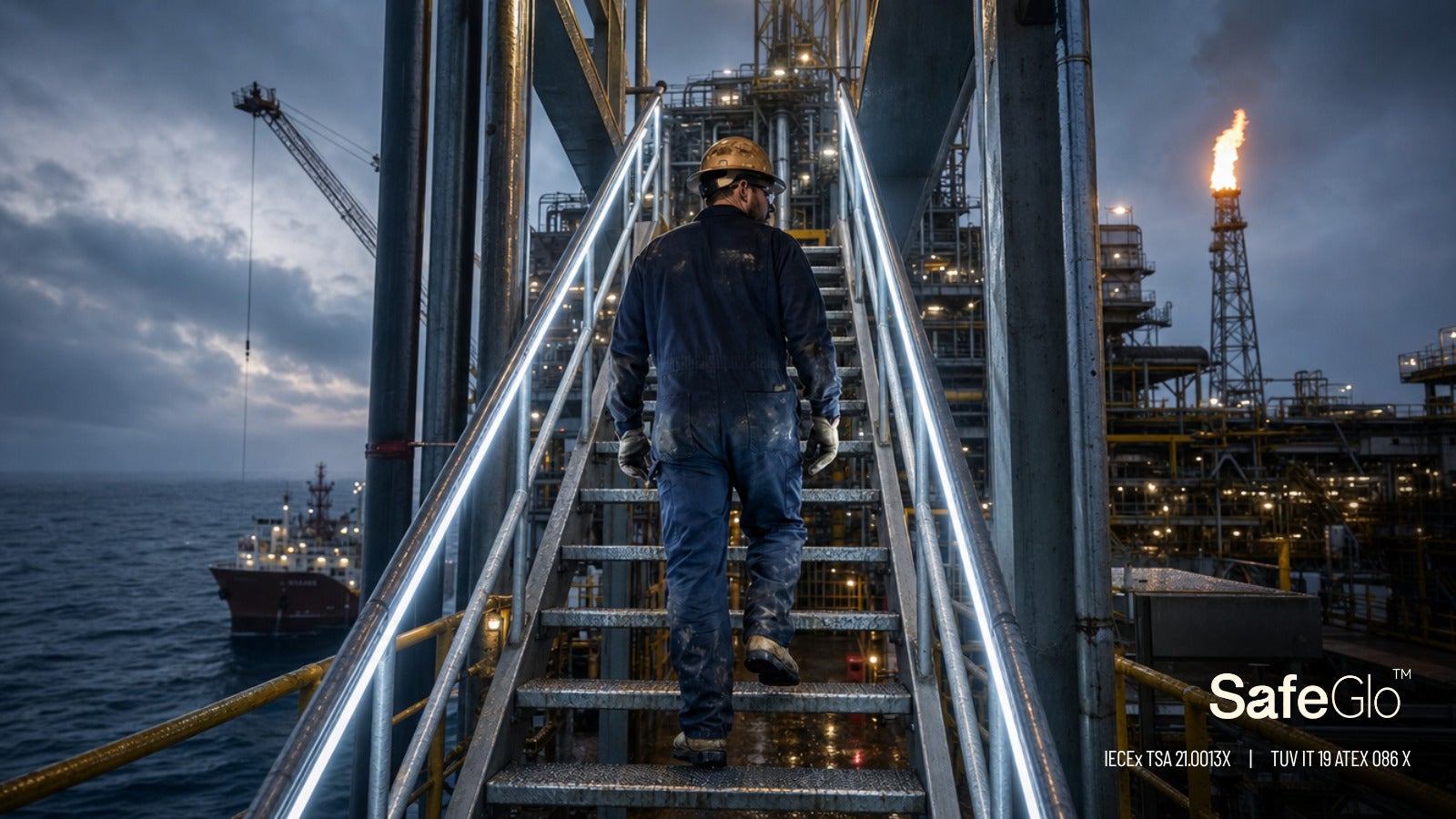
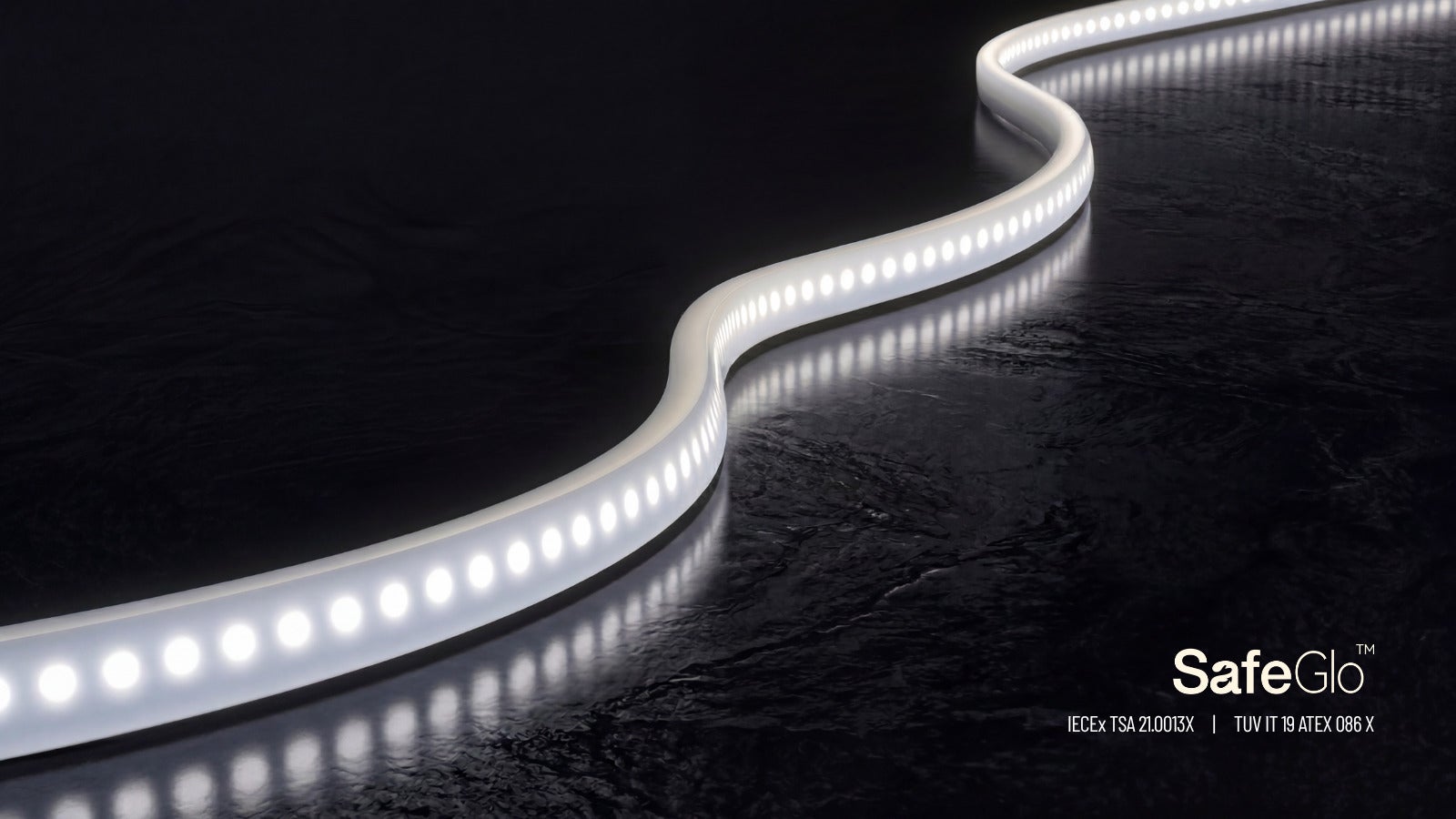
SafeGlo can contribute by reducing loose, snag-prone temporary lighting where a flexible run can be mechanically secured. It cannot compensate for removed gas monitoring, weak contractor control or an inadequate entry procedure.
Operations: the event occurred during job close-out, when crews often assume the highest-risk phase is over. That is when lamps are moved, cables are pulled, ventilation changes and attention shifts toward finishing.
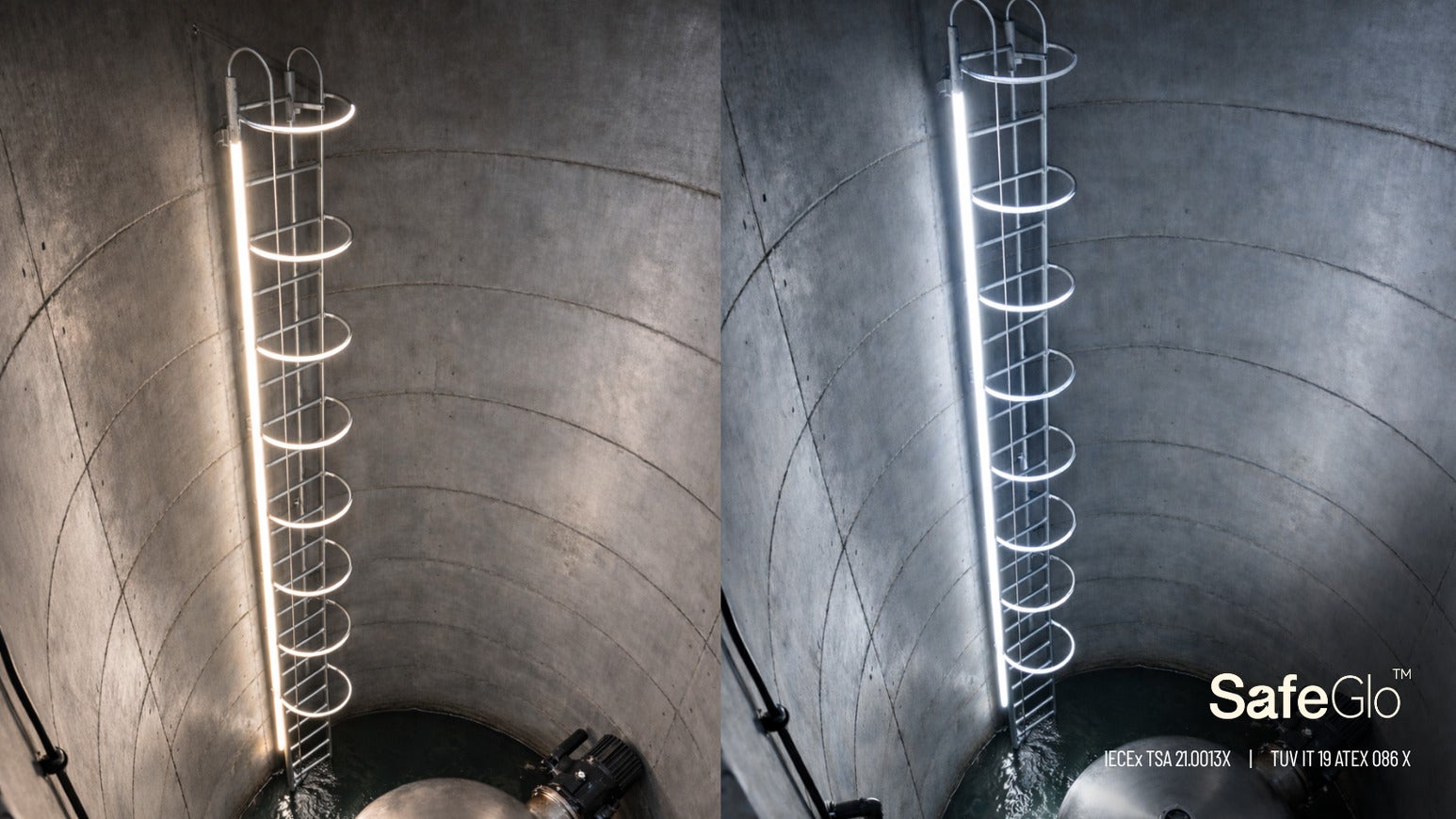
SafeGlo’s operational distinction is a lighting source that can be fixed along the work geometry rather than left as a loose lamp body. A secured linear source can reduce handling and keep the manhole route clearer, but ventilation and atmospheric monitoring still need to remain active until the space is formally released. Damaged or trapped Ex equipment should be taken out of service rather than forced free.
Engineering: the lesson is mechanical and electrical. The light must match the required ATEX/IECEx certification, gas group, temperature class and zone, while its strain relief, bend radius, attachment, ingress integrity and cable protection must suit the task.
SafeGlo publishes flexible encapsulated construction, braided-wire technology, F1-rated silicone and hazardous-area certifications on applicable products. Those features may be relevant to a snag-prone work environment, but suitability for internal gasoline-tank entry must be confirmed against the exact certificate, installation instructions, power arrangement and connectors.
Procurement / ESG: ‘explosion-proof’ should never be treated as a permanent label independent of equipment condition. Procurement needs inspection history, damage criteria, approved accessories and retirement rules after abnormal mechanical loading.
In multi-contractor work, the approved equipment list should be tied to the permit and prevention plan, so lower-tier contractors cannot substitute unknown lamps or cables. SafeGlo can be differentiated through an integrated flexible lighting approach with fewer loose lighting bodies and published durability features, but documentation and contractor competence remain mandatory.
What this case teaches: rated lighting is only one barrier. Once gas monitoring stops and equipment is mechanically compromised, that barrier can no longer be assumed intact. SafeGlo’s strongest role is to make lighting a secured, certified part of the work system and reduce portable-light handling.
The decisive controls remain continuous vapour monitoring, ventilation, contractor communication, entry discipline and immediate removal of damaged equipment.
The decision gate should therefore remain active through demobilisation: gas detector running, ventilation confirmed, cable condition visible, manhole access clear, and a named supervisor responsible for release of the space.
If any of those controls disappear, the task returns to a stop-work condition rather than being allowed to continue because the cleaning itself is nearly finished.
Research sources
- BARPI/ARIA, Accident 35019: https://www.aria.developpement-durable.gouv.fr/accident/35019_en/?lang=en
- HSE, Confined spaces: a brief guide: https://www.hse.gov.uk/pubns/indg258.pdf
- HSE, DSEAR ACOP L138: https://www.hse.gov.uk/pubns/priced/l138.pdf
- European Commission, ATEX Directive 2014/34/EU: https://single-market-economy.ec.europa.eu/sectors/mechanical-engineering/equipment-potentially-explosive-atmospheres-atex_en
- SafeGlo, flexible explosion-proof LED system: https://safeglolight.com/flexible-exproof-light/
Research notes and source corrections
- France ARIA 23074: the lamp is only one possible ignition source. The record also identifies a possible impact spark and a 325°C hot process surface. Do not state the hand lamp as the confirmed cause.
- Germany ARIA 19328: ARIA identifies the site as an LPG storage installation in Ebersbach. It does not identify the facility as a refinery in the available record. The unprotected fluorescent work light is stated as the ignition point.
- Fuel Proof Ltd: the reported HSE prosecution evidence establishes a 20,000-litre bowser, highly flammable solvent cleaning, a hot lamp being unplugged, a spark, severe burns, no risk assessment, no fume monitoring and unsuitable lighting/PPE. The analysis uses current HSE DSEAR/confined-space guidance to explain the risk-control hierarchy.
- France ARIA 35019: the explosion occurred while the cable of an explosion-protected lamp was being pulled after becoming stuck. The official record also highlights missing continuous vapour measurement and failures in subcontractor communication. The document does not claim a specific internal lamp defect that ARIA did not establish.
For more information, please visit https://www.offshore-technology.com/contractors/design-engineering-construction/safeglo