Thermomechanical Cuttings Cleaner
thermomechanical cuttings cleaner

Thermtech is the technology owner of the patented thermal desorption modulator (TMD®) and thermomechanical cuttings cleaner (TCC®) processes used to treat the contaminated solids, like the oily waste produced during drilling, production and refinery activities.

You have successfully submitted your enquiry. Someone from our company will respond ASAP
Thermtech is the technology owner of the patented thermal desorption modulator (TMD®) and thermomechanical cuttings cleaner (TCC®) processes used to treat the contaminated solids, like the oily waste produced during drilling, production and refinery activities.
The TMD and the TCC convert kinetic energy to thermal energy by creating friction in the waste.
Across the world, numerous companies require the use of the direct thermal desorption units for the treatment of their waste. The TMD and TCC processes are used for the treatment of countless different contaminated solids.
The most important property of the TMD and TCC is their ability to recover every component of the waste, with the same qualities of the original components.
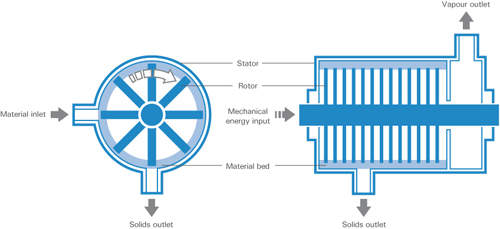
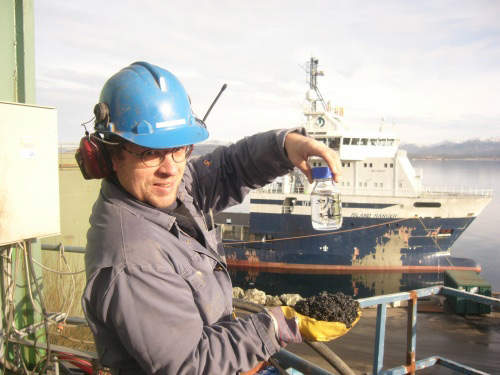
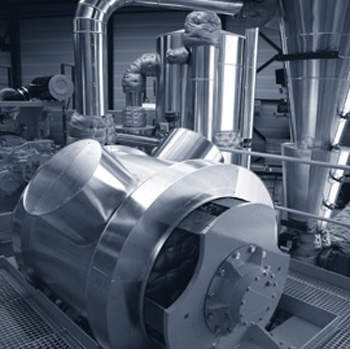
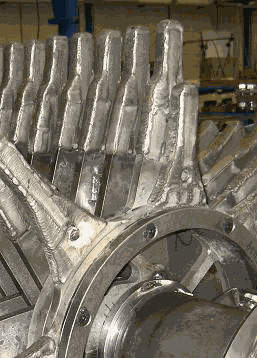
At the end of the treatment, the oil can be reused and the clean solids (down to 0.01% TOC) can be used in different applications, land filled or discharged to sea.
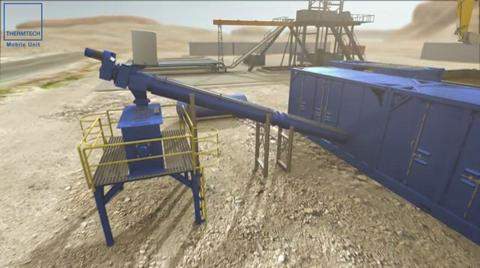
The design of a compact, mobile TCC unit is among Thermtech recent developments. With this solution, instead of transporting the waste to the location of the treatment unit, the mobile unit is transported to the waste.
Aside from the obvious logistical savings that such a mobile unit can bring, its use can also make the whole process much safer by reducing the waste movements, which in itself are dangerous, unhealthy and environmentally negative.
This very compact unit can be installed on trailers, supply boats and offshore rigs, and still offers the same technological advantages, capacities and parameters that have made the Thermtech direct thermal desorption units so successful.
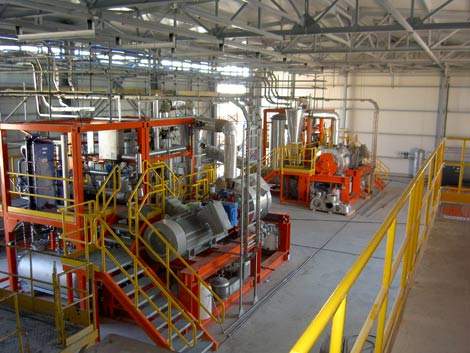
As of December 2014, more than 55 units, designed and built by Thermtech and its license holders, can be found in operation worldwide, located on land, platforms and rigs both onshore and offshore.
Using the same reliable, efficient and proven technology, Thermtech is presently bringing to the market new applications designed to handle different types of industrial waste.
thermomechanical cuttings cleaner
Thermtech set the global standard for the treatment of oily waste; from drilling operations, like cuttings and slops, to refinery sludge and production pits.
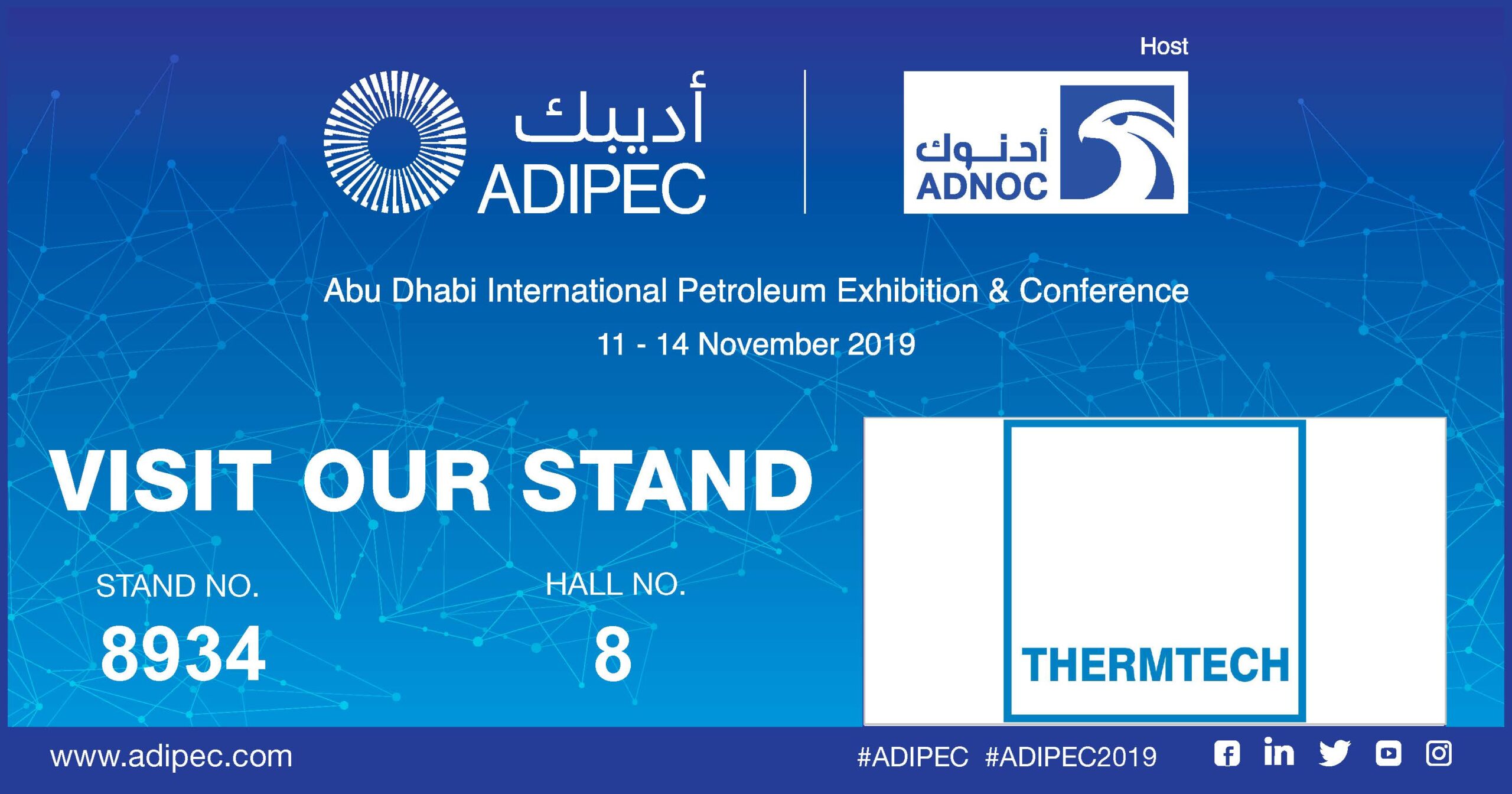
Thermtech is pleased to announce that it will attend ADIPEC 2019 in Abu Dhabi from 11-14 November 2019.
Thermtech is to attend the forthcoming Offshore Technology Conference and Exhibition in Houston, Texas, US.
Norway-based Thermtech AS is pleased to announce that waste management specialist Plambeck has purchased a stationary Thermal Mechanical Cuttings Cleaner (TCC®) system, which will be used to treat drill cuttings from the Mittelplate production island.
Thermtech AS is attending the Offshore Technology Conference (OTC) 2016, and will be showcasing its products and services at the event.
Local waste management company CIC Environmental Services Sdn Bhd (CIC) signed an agreement with a Norwegian technology firm Thermtech AS for the supply of environmental treatment equipment for use in the local oil and gas industry.
The TCC® technology is used on other materials than drill cuttings. Biological sludge from refineries has been dried on a commercial basis. Bio sludge with up to 95% water has been dried in a 630kW unit. Among new areas that are looked into are oil contaminated soil, refinery tank bottoms and production waste.
In June 2015, Thermtech has completed the construction of a small-scale TCC® Test Unit, which is now available for test projects.
ThermTech is to exhibit its products at the forthcoming Offshore Technology Conference (OTC) 2015.
Thermtech is currently manufacturing a new mobile TCCM46E unit, another exciting project for the Thermtech team.
Thermtech is the owner and supplier of TCC® technology.
Dear friends and colleagues, you are hereby invited to visit our boot, 9312, at ADIPEC 2014, Abu Dhabi, 10-13 November 2014.
Please visit us at Rio Oil & Gas 2014, in Rio de Janeiro, Brazil, 15-18 September.
Thank you for visiting our exhibit at ONS 2014 in Stavanger, Norway.
Norwegian technology and knowledge company Thermtech will be exhibiting its thermomechanical cuttings cleaner (TCC) for the treatment of cuttings from oil and synthetic-based drilling mud at Global Petroleum Show from 10 to 12 June in Stampede Park, Calgary, Alberta, Canada.
Norwegian drill cuttings treatment provider Thermtech will be exhibiting at OTC 2014 in Houston from 5 to 8 May.
Thermtech is the owner and supplier of TCC® technology. TCC separates oily waste into its components: solids, water and oil. Zero oil appears in the solids following TCC treatment.
Thermtech is to exhibit at the forthcoming ADIPEC 2013, which will take place in Abu Dhabi, UAE, from 10-13 November.
Thermtech, the technology company which sets the global standard for the treatment of oily waste, will be attending Offshore Europe 2013.
Thermtech, the technology company which set the global standard for the treatment of oily waste, will be showcasing its TCC® technology at the 14th Asian Oil, Gas & Petrochemical Engineering Exhibition, OGA 2013, at booth 9076.
Thermtech will have a stall at the biggest show of the year for the oil and gas industry, the Offshore Technology Conference and Exhibition on 6-9 May at the Reliant Center in Houston, Texas, US.
Thermtech established the global standard for the treatment of oily waste; from drilling cuttings and slops, from refinery sludge and from production pits.
Thermtech is the technology company that set the global standard for the treatment of oily waste from drilling operations, from refinery sludge, from production pits.
Thermtech AS sets the global standard for the treatment of oily waste; from drilling cuttings and slops, from refinery sludge and from production pits.
Thermtech, a Norwegian technology company aiming to set the global standard for treatment of cuttings from oil-based and synthetic-based drilling mud with its Thermomechanical Cuttings Cleaner (TCC®), is exhibiting at Rio Oil & gas 2012 in Rio de Janerio, Brazil, on 17 to 20 September 2012.
Thermtech will have a stall at the biggest show of the year for the oil and gas industry.
Thermtech will be exhibiting at the 20th World Petroleum Congress & Exhibition, taking place on 5-8 December in Doha, Qatar.
The offshore disposal of untreated OBM cuttings is globally unaccepted. The only industrially applied thermal technology that can meet the more severe environmental requirements and operate offshore is the Thermtech TCC®. Unlike skip and ship operations and re-injection, the TCC is
Thermtech, a Norwegian technology and knowledge company aiming to set the global standard for treatment of cuttings from oil-based and synthetic based drilling mud with their Thermomechanical Cuttings Cleaner (TCC®), will be exhibiting Offshore Europe (3A 21) on 6-8 September 2011. Takin
Thermtech has set the benchmark for treating oil-contaminated drilling waste in an environmentally friendly manner with the thermomechanical cuttings cleaner (TCC). Creative design and rigorous engineering have produced a compact and efficient treatment unit that offers distinct advanta
Since the beginning of the year, Thermtech has installed two new TCC® units, both currently in operation in Norway. The first one is operated by Nordmiljø at their treatment plant in Sandnessjøen, the second, operated by DVS Norge, is located in Mongstad. Thermtech set the global
Thermtech has set the global technological standard for the treatment of oily waste coming from drilling, refining and oil production, contributing to a more sustainable and environmentally friendly oil industry. Thermtech technology is commonly referred to as TCC®. 33 TCC units ar
Thermtech, a Norwegian technology and engineering company, will be exhibiting at ADIPEC 2010 on 1-4 November 2010 in Abu Dhabi. Customers and visitors are welcome to join the company at stand#09060K and get the lastest information about the TCC® technology, a patented and advanced ther
Thermtech is the technology company with the vision to set the global standard for the treatment of oily waste; from drill cuttings and slops, refinery sludge and production pits. The goal is reached with the TCC® the only friction-based thermal separation technology which recovers
Thermtech is a technology company with the vision to set the global standard for the treatment of oily waste; from drill cuttings, refinery sludge and production pits. This goal has been reached with the thermo mechanical cuttings cleaner, TCC. It is the only friction-based thermal sep
ExxonMobil have been awarded M-I SWACO to supply offshore thermal desorption equipment for the new build deepwater champion drill ship. The contract is for two offshore TCC Hammermill units combined with a cleancut cuttings transfer and bulk storage system. The dual TCC Hammermill units
The Norwegian waste management company SAR has entered into a purchase agreement for a mobile TCC unit to treat oily drilling waste on several locations along the Norwegian coast. Following a thorough technological evaluation, SAR selected the compact and mobile TCC unit; the treatment
Thermtech is pleased to announce the sale of a Thermomechanical Cuttings Cleaner (TCC®) to be operated by Scomi Oiltools. The TCC unit will be installed in a new facility in Sandnessjøen. The unit is financed by Environtech Rental and rented out to SCOMI Oiltools. The building
M-I SWACO calls for a licence to build a TCC-Hammermill. As part of the existing manufacturing licence agreement, M-I SWACO holds the right to design and manufacture TCC units to fulfil its service obligations to oil and gas companies. After completing the design and engineering stages
Thermtech will be presenting at the Kuwait Oil Sector Contractors Conference on 8-9 November 2009. Thermtech is happy to confirm that Rocco V. Valentinetti, our sales and marketing director, will be talking at the conference about the reuse of base oil recovered from the treatment of d
Thermtech is a Norwegian company and the owner and supplier of the TCC technology, a patented and advanced thermal desorption technology able to treat various kinds of oily sludges. We are currently focused on the treatment of oily drilling waste. The TCC is a very gentle method for th
A brief video demonstrating Thermtech's thermomechanical cuttings cleaner (TCC) system.