How Much Does a Subsea Tree Cost?
Subsea production systems are a network of equipment used to extract oil and gas from the seabed.
AQUASIGN specialise in the manufacture of asset identification solutions, designed to enhance safety and reduce operational costs throughout project lifespans.

You have successfully submitted your enquiry. Someone from our company will respond ASAP
AQUASIGN specialise in the manufacture of asset identification solutions, designed to enhance safety and reduce operational costs throughout project lifespans. We are the recognised experts in oilfield signage as we work with our clients to design bespoke products to meet their project needs – both topside and subsea.
AQUASIGN is a subsidiary within the Nalco Champion and Ecolab corporate portfolio, previously known as Champion Environmental Technologies.
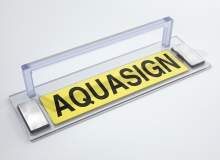
Our core business Aquasign® is a silicone based subsea anti-fouling marking system that mimics fish skin, using a controlled oil release system and hydrophobic surface to prevent bio-fouling at the lowest level.
Aquasign® underwater identification markers are marine growth-resistant, therefore remain highly visible to divers and ROVs throughout the design life of subsea structures. Its anti-fouling performance not only enhances safety, but also provides considerable operational cost savings over a project lifespan by assisting subsea maintenance and inspections.
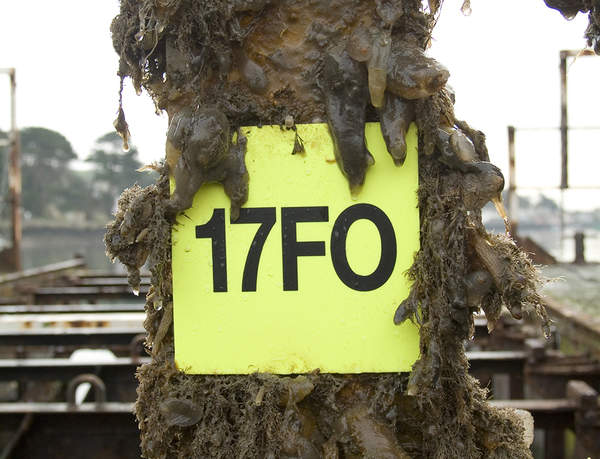

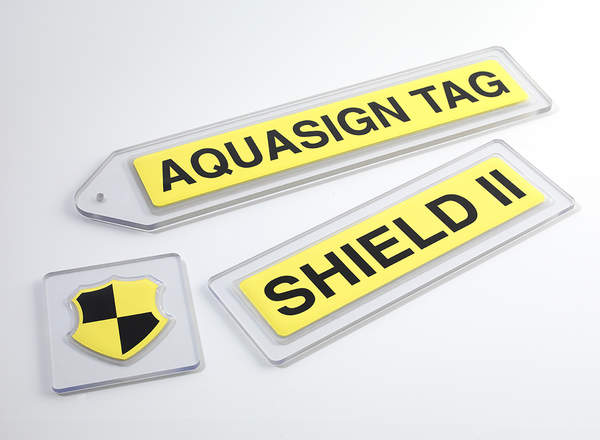
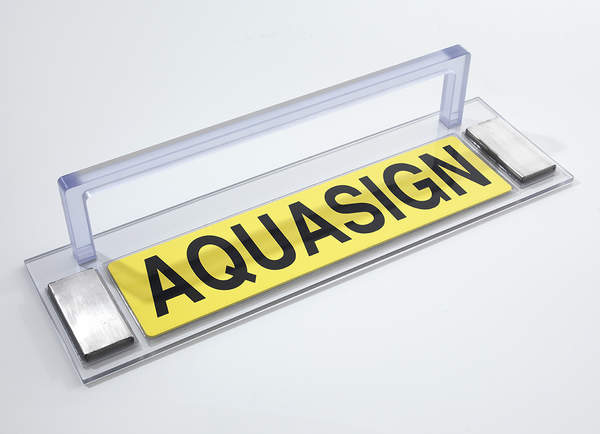
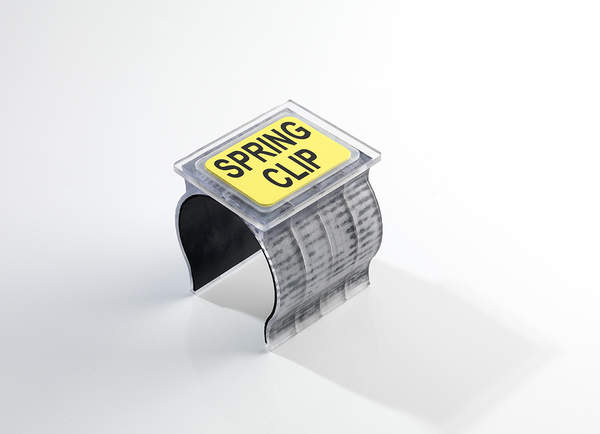
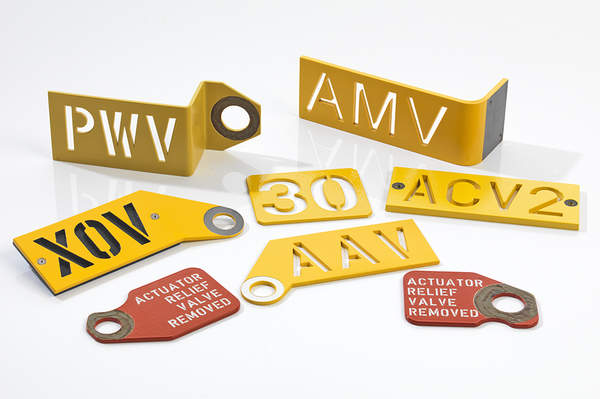
Aquasign® is therefore utilised worldwide to ensure the clear identification of:
Aquasign® has been installed on more than 800 oilfield projects worldwide, and has a track record excess of 30 years. The antifouling labels are highly adaptable to meet customer’s needs, including a range of subsea adhesive and retrofit fixing solutions available that have undergone third-party technical verification. For more information on Aquasign®, view our product pages.
Our internal manufacturing facility now houses equipment used to produce a range of offshore signage.
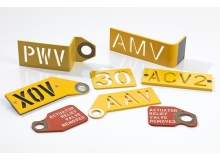
We manufacture an alternative to flame-cut nameplates, utilising CNC milling and waterjet cutting equipment to produce Aquaplates that are suitable for topside and subsea applications.
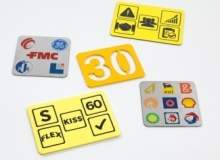
We have a range of in-house equipment available to suit all equipment identification requirements, including certification plates, safety signs, etched nameplates and printed / engraved plastic labels.
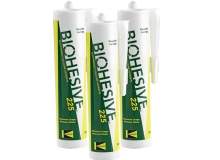
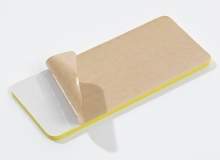
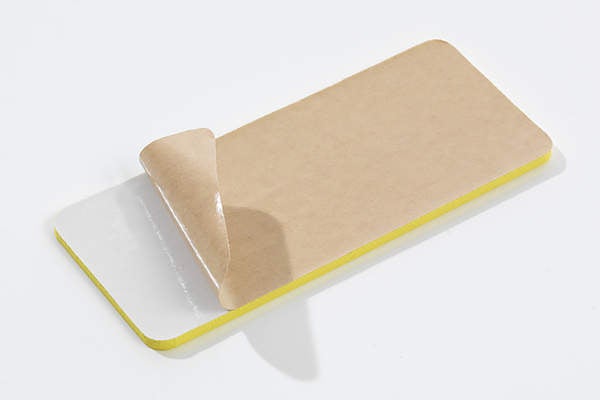
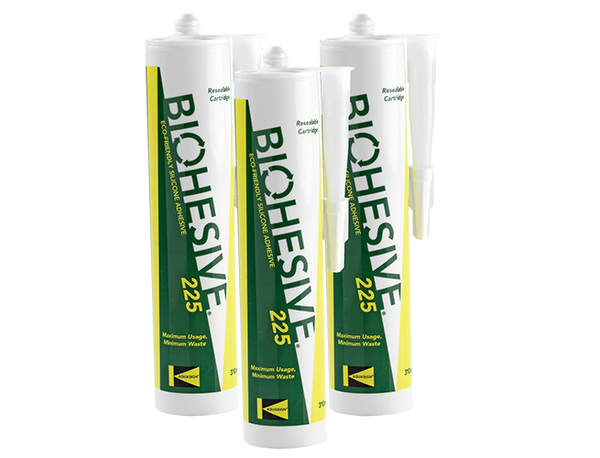
AQUASIGN also offer innovative adhesives that have been specially formulated and tested for long-term performance subsea.
Aquasign® is the leading solution in the subsea industry as our product is unique.
We recently developed our new client portal to showcase AQUASIGN’s expertise in antifouling nameplates and topside signage, both to new and existing clients.
Content includes detailed product specifications including the fixing solutions available, as well as downloadable documents such as testing reports, performance guarantee, datasheets, installation guides and videos, our track record and company certification.
To gain access to our exclusive portal, simply register today at www.aquasign.com. Alternatively our new brochure can be downloaded from the White Papers section.
Subsea production systems are a network of equipment used to extract oil and gas from the seabed.
Our oceans and waterway are used by the Energy sector in many ways such as oil and gas extraction from the seabed and wave and tidal for renewables.
We’re often asked about the kinds of materials that can be used in the manufacture of asset identification markers.

The Laminaria and Corallina fields, located in the Timor Sea 550km north-west of Darwin, ceased production in 2019.
Girassol is one of the four major production hubs of Block 17, which is operated by TotalEnergies.

The life of the White Rose field is expected to be extended through the development of the West White Rose satellite field.

Kizomba oil field lies in Block 15 offshore Angola, marking one of the first tranches of deepwater acreage offered by the Angolan Government.
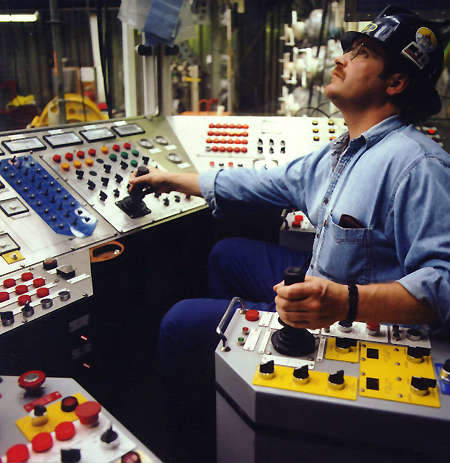
Hibernia is located in the Jeanne d’Arc Basin, 315km east of St John’s, Newfoundland and Labrador, Canada, in a water depth of 80m.
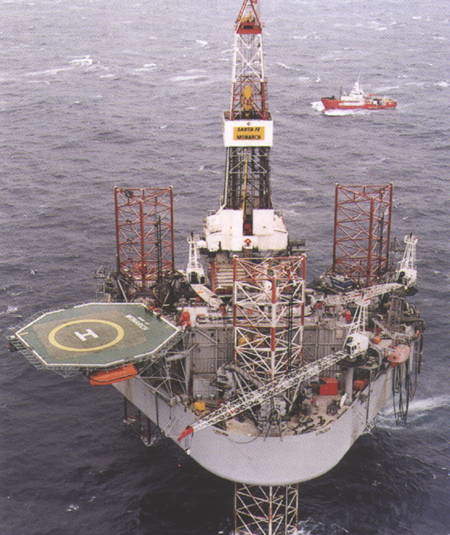
The Eastern Trough Area Project (Etap) is an integrated development of seven different reservoirs located 240km east of Aberdeen, UK, in the Central North Sea.

Bonga is the first deepwater project for the Shell Nigeria Exploration and Production Company (SNEPCO) and for Nigeria.
The Valhall field was discovered in 1975 and came online in 1982. It is operated by BP, which holds a 35.95% interest while the remaining 64.05% interest is held by Hess Norge.
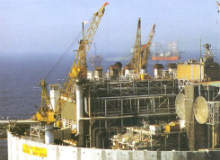
The original Ekofisk area development consisted of eight oil and gas fields, namely Cod, Ekofisk, West Ekofisk, Tor, Albuskjell, Eldfisk, Edda and Embla.
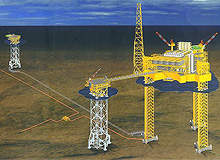
Elgin and Franklin lie 93m deep in the water the UK North Sea's Central Graben, approximately 240km east of Aberdeen.
Aquasign is a unique exuding silicone-based material that will ensure provide long term visibility through a guaranteed anti-fouling performance of 60 years.
Aberdeen-based oilfield signage solutions provider Aquasign is looking forward to a successful 2018 following a turbulent period for the company.
Solis® is the standard specification UV-stable marker solution used for Aquasign® subsea signage products.
The current market climate within the oilfield sector has made the integration of money-saving strategies even more important for operators than in the past.
Finding an adhesive capable of withstanding the adverse environmental conditions encountered in subsea operations and at salt-laden platforms can be a difficult process.
Enhance subsea safety, minimize risk and reduce operating costs – our goals for consolidating the industry standards and best practices for specifying a long-term anti-fouling labelling system for subsea equipment.
AQUASIGN is known for our unique anti-fouling subsea markers, designed to enhance safety and reduce operational costs by offering a guaranteed highly visible equipment identification solution.
AQUASIGN, the leading supplier of asset identification solutions, recently teamed up with National Hyperbaric Centre (NHC) in an exciting project where subsea markers were installed into their state-of-the-art outdoor test tank.
AQUASIGN invites you to explore our improved website, sharing exclusive information on our range of asset identification solutions.
The first version of Aquasign® was sold in 1985 by Blacksmith Chemicals, a Shell joint venture. Shell is no longer involved in the manufacture or marketing of Aquasign markers with Champion Environ having acquired the rights to the technology in 1998. Although still retaining its k
Aberdeen-based company Champion Environmental Technologies, the marker leader in subsea signage, are delighted to announce that they are now widening their product portfolio to cover all forms of oilfield signage from surface to seabed. The continued company growth has created a need